@Wolk has put together a much more complete and unified essay based on the same data that I used that I think pulls together the details in a more satisfying way. Check it out here: The Original Role of the Ruru & Matatu.pdf - Google Drive
5 Likes
This may have already been said somewhere, but… what are the odds that this late decision was somehow related to these same two masks being mistakenly released in the Toa colours?
4 Likes
I have some insight as to the “product versions” of the Toa Mata which may or may not be useful towards figuring out what the six additional Tohunga sets would’ve been.
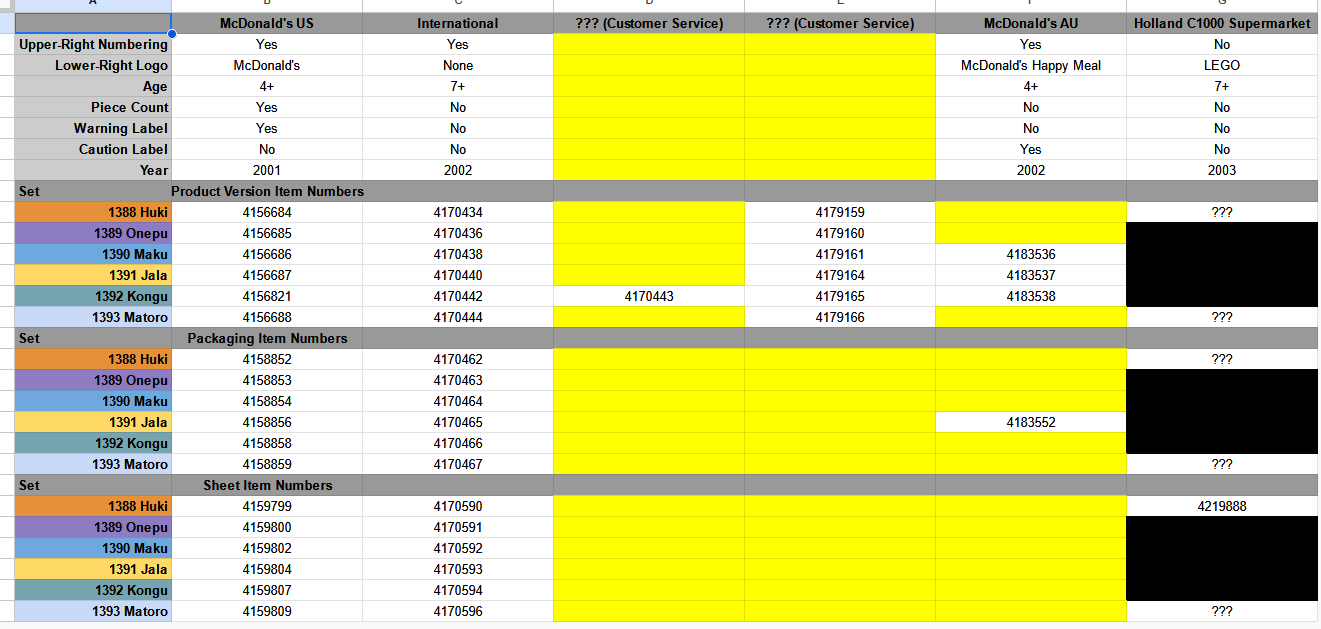
A while ago I assembled a comprehensive list of every version of the Toa Mata ever released, for collection purposes:

The 7-digit item number is the one located right above or below the barcode. For every “type” there is also a unique 7-digit item number denoting that specific release of the rotating sleeve.
Two things are particularly curious here:
-
The six International and six American releases with CDs occupy twelve consecutive item numbers; this isn’t the case for any of the other releases.
-
There was an additional release for Pohatu, Onua and Gali only that lacked Portuguese copy on the packaging. These were produced towards the end of 2001 (but not in 2002 like many of the other releases) in Europe and then distributed in North America.
All of these have been verified with photos of current and sold listings in the 100s if not 1000s.
I also have the six non-McDonald’s Tohunga sealed and will inspect them to verify their item numbers.
5 Likes
Great work! I wonder why the first three were reprinted…
The 02 releases of the Tohunga intrigue me. There are Australian McDonald’s one which… are self-explanitory. But where and how the regular international ones were releases is still beyond me, and I am amazed at how under-the-radar they’ve been on online forums. There’s also further IDs that I have no idea what they’re for :v
We do now have access to the third draft of the story bible:
And with the addition of that, the recent prototype footage Faber released, and some further photos of documents released by Duckbricks:
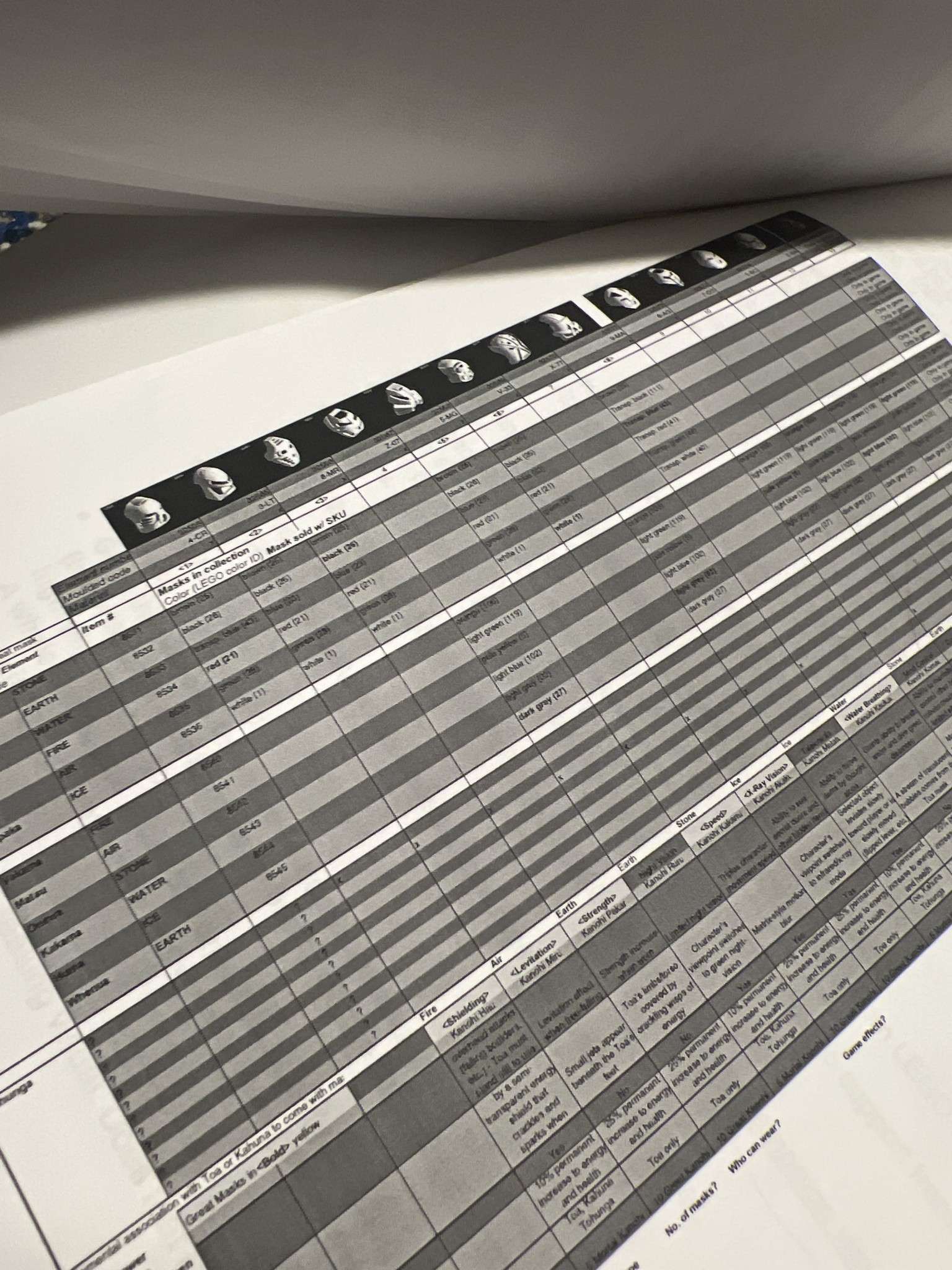
I am now of the belief that:
- the six additional Tohunga sets were going to depict characters of Kotu, Kopeke, Kapura, Tamaru, Hafu, and Taipu - though early drafts used different names.
- across the twelve Tohunga sets, all 12 masks would be used.
- all 12 were going to be released through McDonald’s, and that was always the plan for their release.
- all 12 Matoran would have looked very different from how we know them; based on the video, they may even have had 3 colors each, and Turaga-like staffs like in the games.
8 Likes
I just checked my non-McDonald’s Tohunga sets and the item numbers on the lower right corners are as follows:
- Huki 4170462
- Onepu 4170463
- Maku 4170464
- Jala 4170465
- Kongu 4170466
- Matoro 4170467
Not sure how that lines up with what you’ve posted earlier.
4 Likes
Yeah, that’s what I have as Packaging Item Numbers in the “International” (seocnd) column.
IIRC, I never quite figured out which numbers are for the product version and which ones are for the packaging, since they’re both written on the packaging. (The “Sheet Item Numbers” are the instruction sheets, in case that one is unclear.)
2 Likes
good news element ids for the krana gold and silver kanohi and others are now known thanks to the updated lego cs and brickset

here’s the krana sorted by element id, interestingly there’s only one unused krana id its a metallic black one which was (probably) going to be used in set 8573
7 Likes
Interestingly, I have a metallic black Krana. One of my brothers bought it in a box of Krana and Kraata at a yard sale. I’ll have to see if I can find it for a picture.
3 Likes
poggers
3 Likes
you sure you’re not confusing it with the gunmetal gray ones that came with Pahrak-Kal?
5 Likes
intrestingly ldd has some unused bionicle colorways like a reddish brown mata foot (4211223) a light stone gray glatorian hand (4569084) and not from ldd but a medium lilac/trans brown marbled carapar torso (6096650)
3 Likes
The other two seem plausible, but it’s really weird that this would have ever even been considered for use in a set.
3 Likes
i dont know why but my spidey senses are telling me the reddish brown mata foot and the metru pieces are from pick a brick
3 Likes
strangely the id is around 2015
i wonder if a purple carapar torso doesnt even exists and that element id is for a different piece that brickowl wrongly assigns as a carapar torso
3 Likes
Lost sleep thinking about the implications of this thread and realizing I haven’t seen anyone mention the recoloured Turaga tools here - somehow, it seems those were still likely intended for Matoran use even after the arm shape was finalized to not include an axle hole… I have to wonder why thay would be, and still wonder why they not only widened the hand but removed the axle hole?
5 Likes

Good point you have there…
If I had to take a wild guess, I would say that the McToran were likely going to be regular retail Bionicle sets sold alongside the Toa, Rahi, and Turaga, but then Lego was able to get the McDonald’s collaboration. Cost restrictions probably then took priority so they cut the tools and the arm.
6 Likes
I know I am almost a year late but… Huki and Matoro were released in Europe through something called C1000. I don’t know what C1000 is, just that there was a C1000 version of Huki and Matoro that lacked the mcdonalds logo. I dont know if the other 4 Tohunga were released that way too but Huki and Matoro seemed to be the most common, if not the only ones. (I am aware all 6 exist without mcdonalds logo but idk if they were all available through C1000). As a vegan who hates mcdonalds, I am kinda envious that Illuminatus has the full set without the mcdonalds logo, lol
4 Likes
C1000 was a supermarket chain in the Netherlands. No, there were just those 2 as far BIONICLE sets went, but also 10 other polybags, mostly from system themes.
There’s four versions of the polybags, as far as I know:
- McDonald’s US (says 2001 on the packaging, and confirmed to have been released in September 2001)
- McDonald’s Australia (says 2002 on the packaging, confirmed to have been released in August 2002).
- A different non-American, non-McDonald’s version (says 2002 on the packaging).
- The aforementioned C1000 pair (says 2003 on the packaging, I believe) - ONLY Matoro and Huki.

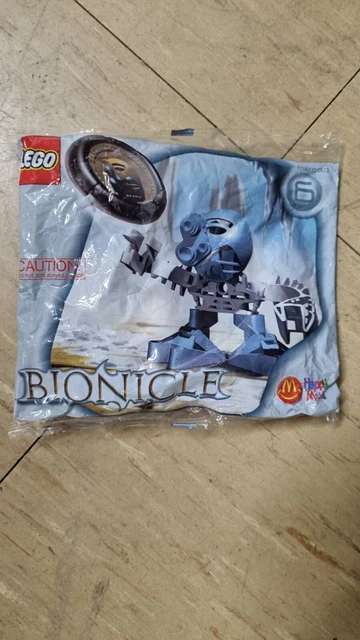


Oddly the non-McD version seems a lot more common than the Australian one.
4 Likes
Looks like the C1000 lack the number (1-6) but the other European release has the number. Makes sense since C1000 did not do all six
5 Likes