Depends on the fan, but I think generally Bionicle fans were actual fans of the sets, rather than fans of the Bionicle story. Don’t get me wrong, I’m sure there are plenty of people who like the story, but the vast majority of people who enjoy Bionicle enjoy it because of the system it had, rather than the characters it had. In fact, I was one such fan - before I knew anything about the story of even Hero Factory, I thought the sets were rad. When I started getting into Bionicle, it’s because I wanted to build some crazy cool looking robot dudes, not because I thought Tahu was an interesting character. I think the same thing goes for just about everyone on these boards as well - if Bionicle had no grandiose story, we would still like it because we like making funky mechanical dudes.
I’m pretty sure that even people who are primarily fans of Bionicle for the story (such as myself) still see the theme as Lego sets with a story around them, rather than sets of their favourite story.
Officially no but we can make decent guesstimations.
So kind of like what Minethuselah was saying, every theme/product line is going to have a mix of both major types. And very successful lines, like Bionicle once had, are generally going to have more fans of Lego than Lego fans by pure statistics. After all, more people will just buy and enjoy the product as is rather than being converted into a hardcore purchaser.
Looking at the fanbase, even back in its earliest days of 2001, it is majority made of Lego fans. Especially the online portion. Even the lore and story-focused factions participates in MOCing and making custom builds. One has to as combo models are a requirement and many fan designs were made canon.
Based on the leaked Faber documents, it appears the LEGO Group also views Bionicle fans as…well, more so in the Lego fan category. In Exo-Force’s performance notes, that theme had trouble attracting and converting purchasers into other Lego products. And only a small percentage of Bionicle purchasers would also buy Exo-Force. Which if that remained consistent throughout Bionicle’s run, we could be looking at a third category where Bionicle fans stayed as Bionicle fans and maybe were fans of Lego and rarely converted fully into Lego fans.
Personally speaking, I believe Bionicle fans are Lego fans. We build too much and care too much about parts to not be considered on the obsessive end. It’s also quite something to see that what few Ninjago MOCs exist online are often made by Bionicle fans. And when it’s not Bionicle fans, it’s usually Lego fans that have a greater preference for a different theme.
As for it being counter-intuitive, not really. A core customer-base is always going to be outnumbers by the casuals. Think of it this way, there are three groups of customers.
- The group who will never buy your product.
- The group that can be convinced to buy one, maybe two, or a couple of purchases a year.
- The core dedicated group who makes frequent purchases throughout the year.
Smart companies will not court the first group. Many still will try because that red ocean is the last remaining people they have yet to exploit.
The second group is the largest that constantly needs to be convinced to buy your stuff. If you’re going to continue being massive, you need this group the most. These people also can’t really tell the difference in quality. Price and brand name are the only real factors. To them, Mega, Lego, Nanoblocks, and the rest are all just legos. So you constantly need to battle for them, but if you’re successful you can get some to be the more loyal ones. Like EA relying on FIFA fans to always buy their sports game every year and not other soccer games. You might even be able to convince some of them into becoming the core group.
And then there’s the core. There is a blessing and curse with the core group. Once they’re in, they’ll stay. They’re the easiest to keep but the hardest to please. After all, they like your product or the kind of product you make. But if they can do it better themselves, or find someone else that is offering some compatible, they will also go do that.
For example, Jangbricks is definitely a Lego fan and a core one at that. And never has he fully been loyal to Lego alone. He buys from other building block companies and that has only increased. Most Lego fans doing displays at conventions use third-party materials and I’m not just talking about light kits and things like Brickarms for the military guys. Because purism to Lego isn’t the important part, it’s the system. And when Lego isn’t providing what they needed, they’ll go to Gobricks and third-party Technic motors and custom resin-casted masks, etc. But unless you royally screw up, they’ll always be back. They’ll be making large purchases at homebase.
You see this with Transformers as well. Hasbro caters somewhat to the wishes of the collectors/big fans, but they’d rather make most of their marketing decisions based on child psychology rather than selling to teens/young adults, who are the main buyers of Generations figures (similar to how most licensed themes are targeting teens and young adults).
These companies started as toy companies selling to children and the parents of children. Now that they’ve moved out of that stage and are focusing on the collectors, they have yet to ■■■■■ their marketing to the correct demographic. The designers and product engineers know what people want (just look at Transformers Generations and the various collectors-oriented LEGO sets), but the marketing team is still working based on the 3-year attention span concept for kids. That’s why Ninjago reboots every ~3 years, and it’s actually killing the ability of these companies in general to actually maintain the marketing for their IPs. Transformers hasn’t had a single continuous story since IDW stopped its comic run(s) back in 2019(?). Ninjago has rebooted nearly 5 times since 2011.
To have an IP last long enough to make bank as its own thing, Lego needs to let it be on shelves and actively developing a story for around 2 years minimum (like Ultra Agents and Hero Factory), rather than constantly rebooting to try to capture new fans of the show or just making limited-run collector sets that are too expensive for the average fan anyway. Technic is the exception here, I love the giant construction vehicles (but they’re in the spirit of the original Technic sets anyway so they work fine).
I think this can be corroborated, even anecdotally, by the sheer number of people online who, when presented with anything Bionicle-related, will go “Oh yea, I remember Bionicle. They were really cool toys. I used to have the red one as a kid.” Or something similar.
Almost nobody will get reminded of Bionicle and start reciting lore. I think that a decent number of people might know or remember that the storyline was shockingly complex for a kids toy, but they won’t know any specific details.
Which is funny to think about because us hardcore people in the community love debating what aspect of Bionicle was the most important to its success when very clearly, by the insane volume of people nostalgic only for the sets who likely didn’t even know there was a story, the actual toys were the most important part.
On an anecdotal front, I do have a strange observation. One of my coworkers, 20+ years my senior, when I talked about my Lego builds and saying I primarily build Bionicle stuff he said, “Oh yeah! You know, that would have kept going if they continued the cartoon.”
Now that confused me, because G1 didn’t have a cartoon. And figured maybe it was just an error because toys usually had cartoons. Especially with the shows he grew up watching. There wasn’t much point in correcting and we moved onto other discussions.
I bring this up because this bizarre moment wasn’t the only instance where this happened. It also happened at comic cons I attended this year where some LUGs had stuff out on display. There was one section with Toa Mata revamps and several guys in their mid to late twenties were talking about it.
One of them said, “Oh, these are Bionicles right? From that cartoon show?”
One of the others corrected and said, “No, that was the later one. These ones were from our era. These are the OGs.”
And that’s when things started clicking into place. Yeah, the sets are recognized more, but either Hero Factory’s animated specials on Cartoon Network and/or the Netflix show for G2 is crossing wires with people’s memories when it comes to story stuff.
Might also refer to the G2 animations, though I don’t think those were that widespread.
I miss Mega Block’s Spiderman sets.
LEGO should keep up the building viewpoint seen in Galaxy Squad and encourage customization.
I wish they’d continue the lore for that, since Ultra Agents was actually a sequel to Galaxy Squad.
And galaxy squad technically happened because of monster hunters
That I hadn’t heard. What was the connection?
I dont remember names right now, but essentially when all the moon stones were used, a beam of light shot up into thr sky, and it continued deep into space, where the early waves of galaxy squad bugs are shown following it.
Its a bit of a loose connsction, but I find it cool that lego still took the time to connect all of their themes like that. Ill find the actual comic later and post it here, its out of a club magazine
There was also a comic teasing (blatantly showing) themes like Pharaoh’s Quest and Atlantis tying into the Alien Conquest line, although it’s been years since I saw it so I couldn’t tell you the details
Don’t get me wrong, I like those too!
I, just like @LegoDavid, wish to have more variety, because, as it was stated by him earlier, the balance has shifted way too much in favor of licensed sets.
My two cents on the recent topic:
I think the example given by @ajtazt above, is illustrating pretty well, how Bionicle would’ve really got use of an actual TV show back in the day.
It was already said before, but it’s still worth emphasizing:
G1 started out relatively simple and got more complex over time, which later on did more harm for the line than good.
The inaccessibility of the G1 books & the novels made it even worse, as they weren’t even advertised, and from my experience, they weren’t released that widespread on the market either.
I think if G3 ever becomes a reality, and Lego wants to do it right, then it will definitely need to have a TV or streaming show.
An audio-visual program can reach a wider audience (especially within the younger demographics) than a text-based one, as Ninjago and most modern Lego themes have proved.
But for Bonkle to simply copy what those did is not enough.
In short:
If Bionicle ever returns, it needs to adapt to the current environment while also embracing some of its defining characteristics, like the mature storytelling & unique design aesthetics.
Bionicle is coming back in 2026.
It was also supposed to come back in 2025, and 2024, and 2023, and 2022, and 2021, and 2020, and… but i’m sure this time it’s for real.
Here’s another unpopular opinion related to this: I think the fact that it took LEGO all the way until 2011 to come up with a proper TV series for their toys is a prime example of how behind their times LEGO often are. Other toy companies have been doing this since the 1980s but it took LEGO 30 years to finally properly step into that game. Now, there were a few outliers like Fabuland that could be perhaps considered to be the first “proto LEGO Show” however the episodes were more like mini shorts and the series seems to have only been aired in Europe as far as I can tell and was not released so widely. However, we never got any proper shows for any of LEGO’s themes from the 80s and 90s, like Castle, Space and Pirates even while action based Toy Lines based around TV series that came out in the 80s, such as Transformers, He-Man, and G.I. Joe are now fully part of the mainstream pop culture scene. But when it comes to LEGO, after 30 years LEGOs Original Themes have still failed to break into the mainstream. Ninjago is the closest we have gotten because we got the Ninjago movie, but when you consider the fact that this was the only original theme to receive a mainstream theatrically released film when they have so many great original themes (both old and new) to me shows that LEGO have a remarkable lack of confidence in their own abilities and also that their thinking, for whatever reason, has always been consistently backwards and behind the times. The reason this bothers me so much is that getting a TV series for Bionicle in the 2000s (especially given the fact that we have gotten four direct to video movies) would have not only been possible, but even arguably necessary and essential for a line like Bionicle. The way the story was told, while effective in gathering a niche following of dedicated fans, essentially made Bionicle a “closed theme” with nobody except people who had been following the series from the beginning ever joining as new fans. I can’t help but wonder if Bionicle could have become what Ninjago is now, an evergreen theme, if only LEGO would have actually made a TV Show for it back when it would have actually mattered. And not only that… Could more of LEGOs Classic Original themes, both old and new, have also become even more popular and break into mainstream more if those themes would have received proper TV Shows back when the Toy Industry actually first came up with this?
I remember that one! The aliens and the mummy teamed up to make some kind of mech (which got shot apart), only to reveal that the alien leader had released dinosaurs against the city in a teaser for Dino (2012).
I think that has more to do with the fact that none of those really had a story beyond generic space exploration (and then space piracy with space police/military to deal with Blacktron), while Castle and Pirates honestly had less story, being just pirates vs the British and Spanish navies, and assorted medieval factions (most of which, like the Forestmen, were ripped straight out of folktales that practically everyone knows).
And possibly, that actually helped Lego, because parents aren’t quite as interested in buying kids toys based on “US military shoots terrorists in assorted countries” when the news at the time is the Gulf War and the aftermath of Vietnam. There’s a reason GI Joe is one of the least popular Hasbro lines right now. The show and comics for that line were the only things that (briefly) made it popular, while LEGO’s sets from the 80s that had only a very basic premise actually made the company’s reputation as a family-friendly company (Hasbro meanwhile was getting beat for D&D, GI Joe, and its other “violence-based” lines like Masters of the Universe). Most of those competitor lines, again, were ONLY popular because of the cartoons and comics, not because of the toys themselves (they were mostly action-figure lines, and you don’t market those like playset kits).
It wasn’t until the 90s that Lego started having full story-based lines of their own, and that was due to a variety of factors including changing preferences of kids (more violent kids’ series were being made, as the 80s tv networks were ridiculous with how they handled violence in the US), a focus on more vehicles in sets over static buildings (see every action theme Lego produced during the 90s-present day) to add play value (dubious), and more reliance on actual marketing (prior to this, Lego used marketing very similar to their current model based on promoting creativity and showing how versatile their parts were).
They never were truly behind the times except in marketing, and that’s why they nearly went bankrupt around 2000. They spent excessive amounts of money trying to compete with all their competitors simultaneously, and wound up significantly paring down their offerings because they were making and throwing away themes like crazy. You ever see Z-nap advertised, or Scala? Or Cyber Strikers? Lego’s current focus on safely making money is probably due to how bad they got burned from their economic issues. It was bad enough that they hired outside assistance for nearly everything (they got new finance people, hired child researchers to suggest better marketing), and massively cut down on the use of single-set single-use prefab parts. They’ve only started making more specialty parts now because they need them for the licensed stuff.
Even back then LEGO was using storytelling as means of promoting their toys. While it’s true that most of their themes at the time tended to be based on generic easily recognizable tropes, those themes still had a story attached to them told through various kinds of media. Pirates, for example, had its own comics and even an audio drama series!

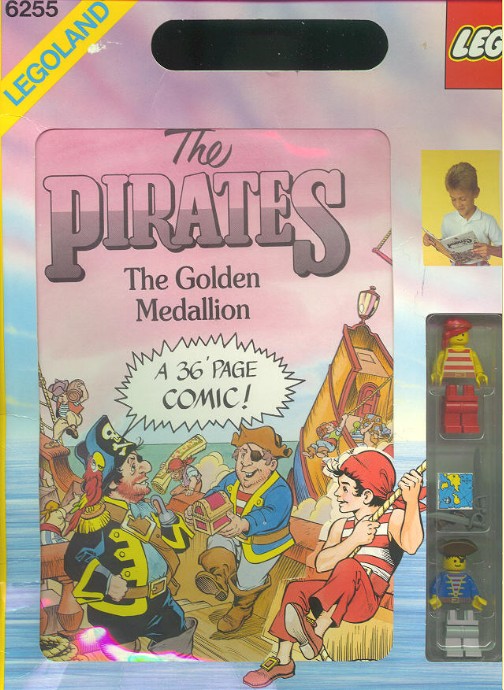
So, in my opinion at least, I don’t think it’s unreasonable to wonder why LEGO couldn’t have produced any actual TV Shows at the very least starting with the 1990s, when they had already tested that concept to some degree with the Fabuland series already in the 1980s!
There is a slight difference between an audio drama and a full-blown television series, not to mention requiring an actual story worth telling (which was very lacking in the early LEGO themes). Bionicle is an exception to the LEGO formula in many ways, and the type of story it told has not been matched in tone or complexity, as even Ninjago’s near-15 year run pales in comparison to the level of maturity that Bionicle introduced.
Not that Bionicle’s story was notably mature or even that complex, it’s that LEGO is really bad at telling engaging stories with their products. There’s a reason why licensed sets sell so well and why LEGO makes so many of them; other people are way better at telling stories than they are.
Alright, on other potentially unpopular opinions (maybe?) - the Vahki are no worse villains or characters than ones from prior years, they just lacked presence.
We know Greg primarily didn’t like the Vahki and thought very little of them. But tell me, going through each of the characteristics described of the Bohrok, Rahkshi, Visorak, etc., do you ever see them in the story? Do they ever behave or show how one breed or unit is really different from the others? Rare enough that I’d say never. All of them are functional identical to each other. Not just in the specific swarms but even between the swarms. So then, when ignoring the sets and looking at it purely from a story and character front, why do the rest stand out?
Because Metru Nui itself was the suffocating presence.
2001 Rahi - Introduction enemies that are just corrupted/infected animals. Not true villains, only serves to better give the primitive idea of the island of Mata Nui. If not for being the first, they would fall into obscurity. Arguably only the Muaka is even iconic out of them.
Bohrok - A very strong presence being the disruptive force to the island. A singular, destructive purpose with two fun taglines that sums of their entire function.
Bohrok-Kal - Forgettable. Worse Bohrok supposedly with personality. Right. No presence due to repetitive nature.
Rahkshi - Strong presence, heavily enhanced by the movie. Weird alien snake/slug things, sons of satan, destructive purely in opposition to the virtues. minus the canon extras
Vahki - Weak presence. Metru Nui is new, it’s the dystopian future city. These robots help enforce this idea so much they’re just absorbed into the walls. They could simply not exist and the same oppressive presence Metru Nui has would not change. Could easily be replaced by Matoran.
Visorak - Strong presence disrupting the city. They work for the same reason as the Bohrok but stronger with an immediate change to the environment. Mutating conquerors that curse everywhere they go.