LEGO BIONICLE G3 Building System Concept - T.A.F.B.S.

The year 2026 marks the 25th anniversary of BIONICLE. Because of this, the huge part of the BIONICLE fandom is patiently awaiting for any kind of leaks or rumors that might in any way suggest that LEGO will give us an official announcement of BIONICLE G3 this year. After all, constraction sets are one of the three systems that was defining LEGO since 1999, and since the company killed off those sets with the cancellation of the last wave of CCBS Star Wars sets, people have grown seriously tired with the lack of new parts necessary for building BIONICLE MOCs.

And although the leaks coming to us from people working at LEGO are highly disappointing, there’s hope: several independent sources have reported to me that within the Creative Team there are still BIONICLE enthusiasts who want to pitch the idea of bringing BIONICLE back to their superiors—though for now it seems they are stuck at the stage of developing a build for future sets.

Regardless of the level of advancement of their work, these leaks inspired me to attempt a similar challenge myself: I decided that, based on what was best in G1 and G2, I will develop my own BIONICLE G3 building system, using as few new molds as possible, and for the time being focusing exclusively on canister sets (I do have some ideas regarding the Matoran, but I will draw those another time).

As of today, I would like to share the sketches that I have already drawn. This is the T.A.F.B.S. — the Technic Action Figure Building System.
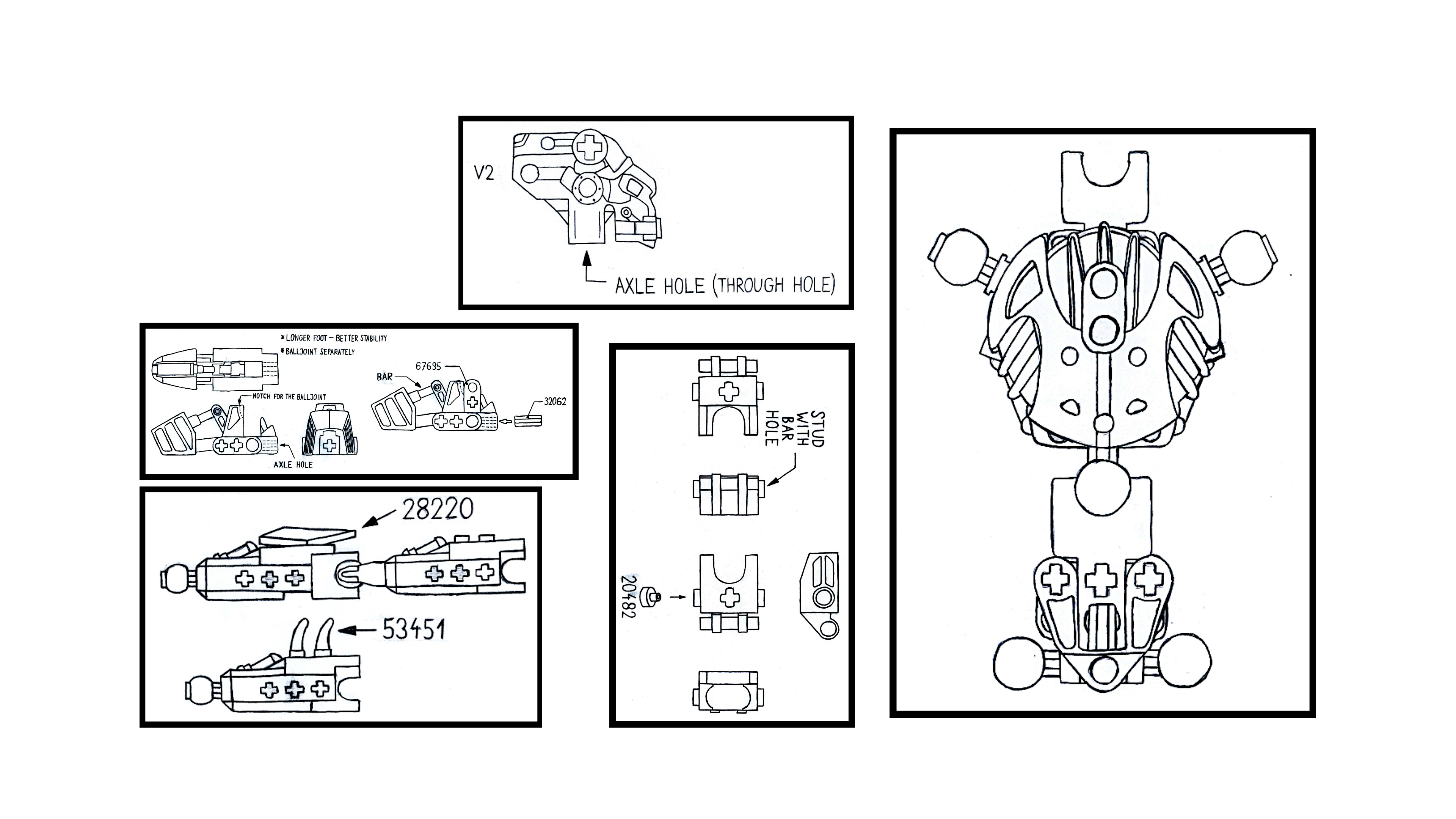
Let’s start with what the TAFBS system actually is.
It is a BIONICLE figure-building system based on what was best in the old builds and meeting the following assumptions:

  • First, it must be compatible with all legacy BIONICLE parts.

  • Second, it emphasizes the use of a larger number of smaller elements instead of relying—like G2 did—on a set of huge monolithic pieces. This gives much more freedom when building combiners, allowing a buyer of just a few sets to build an impressive MOC without ordering additional pieces.

  • Third, the new elements should offer many build-customization options so that anyone can build their ideal Toa without being limited by the lack of axle or pin connections in key structural places.

  • Fourth, it must offer full articulation, including elbow and knee joints, whose absence has become a real plague in recent years.

  • Fifth, it must visually match other G1 figures.

  • Sixth, the new elements must be versatile and useful enough to find applications in other LEGO themes, allowing the parts to remain in production even if a potential G3 were cancelled prematurely.

  • Seventh, in case LEGO does not bring back BIONICLE as a Technic-based theme, the new elements must be easy to 3D-print. That means ball joints must be separate pieces from the new limbs, since printing a ball compatible with a socket requires high precision and would be troublesome.

  • Finally, eighth, the TAFBS system uses a Toa with specific proportions as its base, where the distance from the tip of the ball-cup to the tip of the ball in each limb segment is: 8 studs for lower legs, 7 studs for thighs and forearms, and 6 studs for upper arms.

Let’s begin with the head.
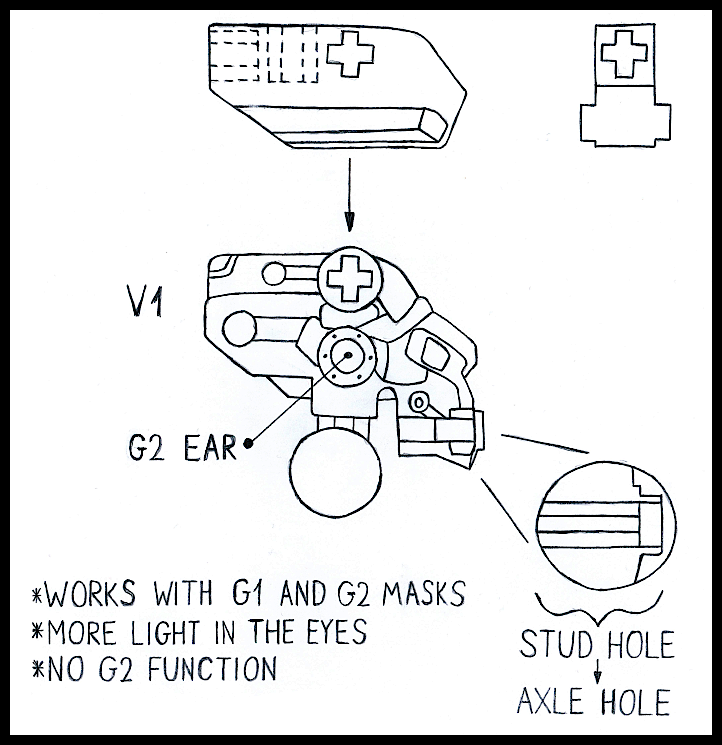
The most important element of every BIONICLE set is the Kanohi mask worn by each figure.
Across both generations, LEGO used three methods of attaching the mask to the head: via a stud, via an axle, and via pegs that snap into the holes on the sides of the head.
And although masks with axle connections were undoubtedly the best solution, the goal for the TAFBS head was compatibility with absolutely every existing mask—even if fans weren’t fond of the 2015 system.

Thus, the TAFBS head has the same “ears” on the sides as the G2 heads, allowing every 2015–2016 mask to be mounted. However, it does not include the irritating mask-ejection feature activated by pressing the transparent “brain.”
The mouth area, on the other hand, is designed similarly to what is so far the best BIONICLE head variant: the Toa Metru head.
In other words, it is a through-axle hole that begins as a stud connection, allowing masks from 2001–2002 to be mounted, as well as all masks made in later years.
Although the sketch does not show it, the mouth is surrounded on four sides by sloped details reminiscent of the shape of the Kini Nui, referencing the mouth area of the Toa Mata head.

What makes this head stand out most is a groove for the “brain” that is twice as deep, allowing more light to pass through, making the figure look more lively, along with a transverse axle hole instead of the pin hole found in Metru and G2 heads. This makes it easy to mount, for example, antlers from the sides without them wobbling.

The “brain" itself has three axle sockets: one transverse for attaching it to the head, one in the back for those who want to add decorative details (as with Kongu Mahri), and one on top, allowing helmets to be mounted and providing an alternative mask-attachment method—something builders experimenting with custom heads will surely appreciate.

The trickiest part to design was the method of connecting the head to the torso.
Originally two options were considered: a neck ending in a ball (G1 style) or a ball socket in the head (G2 style).
The G2 solution severely restricted head articulation because the thick neck collided with shoulder armor.
Thus, the first draft reused the classic G1 approach.
However, after drawing it, a third idea emerged—far better than the previous ones and never used by LEGO—allowing for more customization: a bottom axle hole in the head.
This would also be easier for 3D printing, since creating a compatible ball requires more precision than printing a simple through-axle hole.

This third option is therefore the best, even if it adds two more elements to the figure—something that shouldn’t pose a problem or significantly increase the cost should LEGO adopt the idea.
And even if it did, the benefits are worth the price.

That’s all for the head—now let’s move on to the foundation of the entire construction: the foot design.
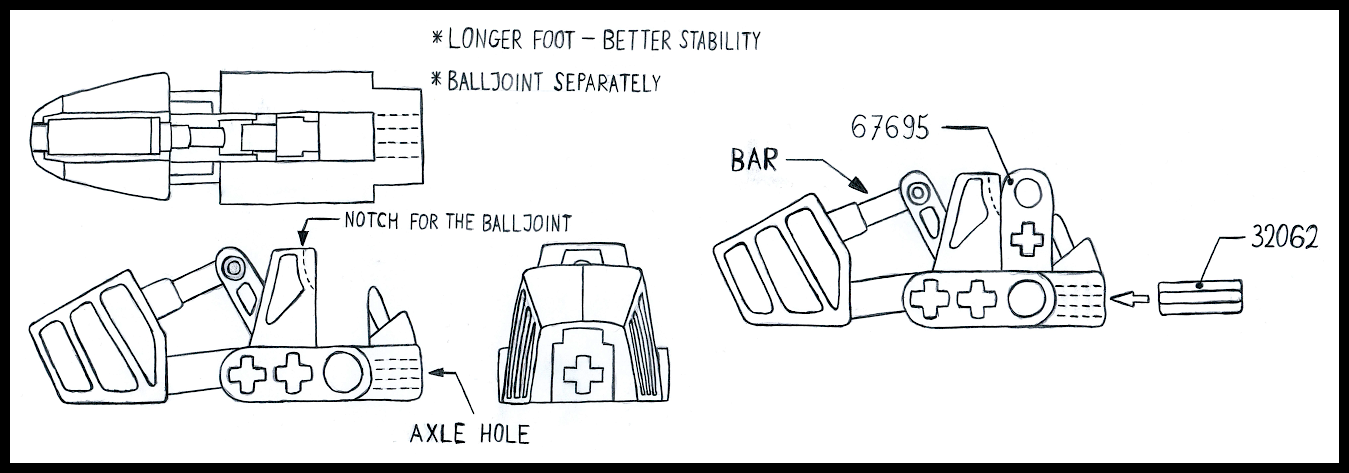
The TAFBS foot is essentially an improved variation of the Toa Mata foot.
Since no later wave introduced a more versatile or useful foot element for MOCs, there was no need to abandon what already worked and visually matched G1 parts.
The TAFBS foot is slightly longer than the Mata foot, ensuring better stability, since Toa built under TAFBS principles are roughly half again as tall as Toa Tahu, for example.
It also differs in the placement of axle and pin holes.
The biggest difference is the lack of an integrated ball socket and an enclosed heel with an axle hole, allowing a separate ball-socket piece to be attached.
And because the socket is a separate element, the foot becomes a versatile piece that can also serve as a base for a torso or a forearm—something custom Rahi builders will love.
Worth noting is the decorative piston with a slightly larger diameter than the original Mata foot—specifically, equal to the diameter of a standard bar—allowing additional decorative attachments, which detail-oriented builders will undoubtedly use.

The sketch shows a note suggesting a cutout in the wall of the connector slot.
This is important because the ankle ball would collide with that wall, preventing proper assembly.

And speaking of assembly—that’s all for the feet, so now we can move on to limb design.
The biggest challenge when building Toa-scale MOCs, especially after all variants of BIONICLE limbs went out of production, is constructing a stable limb with good articulation, one that doesn’t fall apart too easily yet also isn’t overly long.
Reconciling these requirements is nearly impossible, or at least very problematic, with the current LEGO part library.
Therefore, the limbs required the most detailed design work.

Until now, LEGO used two approaches for limb construction:
The first used parts with balls or sockets on both ends. These limbs were decorative and didn’t require armor, but they introduced chaos when building more complex combiners and Titans. Many also featured a knee joint with a ball enclosed from the sides, limiting part versatility.
The second approach, CCBS, offered limbs with a ball on one end and a socket on the other. These did not look good on their own and required boring, bulky shells that highlighted the joints in an unaesthetic way. Additionally, each limb had an integrated ball halfway through, limiting how the part could be armored.

Originally, TAFBS planned to introduce a new kind of shell inspired by the Uniters armor, more fitted to the limb shape, with more axle and bar holes, allowing for more customization and slimming down the figure.
But ultimately, every design required replacing existing elements, revealing that CCBS was fundamentally flawed for designing welllooking nonTitan limbs and that its assumptions required a complete overhaul.

From numerous unsuccessful attempts to fix CCBS, the idea of a shell that doubles as an integral limb component was born.

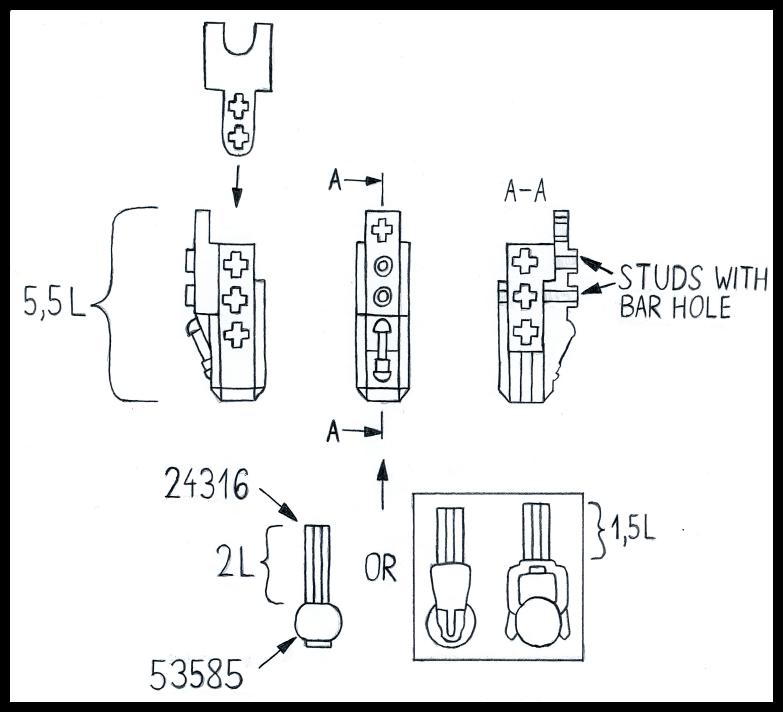
TAFBS shells are much slimmer, only two studs wide, with multiple axle holes around the perimeter for maximum versatility. They look good enough on their own to not require a mass of decorative shells that increase set prices.
One end features a 1.5studdeep axle hole, providing enough friction for the axle to stay in place during posing. This allows a threestud axle with a stop to be inserted and fitted with a ball joint.
For now, that axle exists only in brown, but given its importance in this build, LEGO should really introduce it in black.
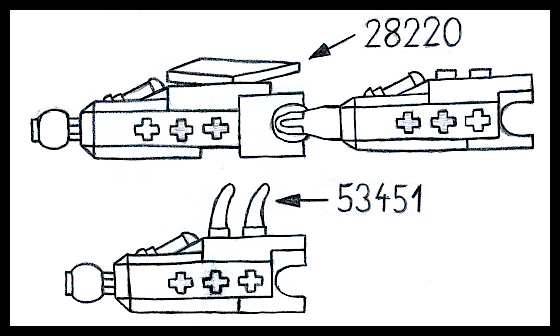
The other end of the shell is designed as a receptacle for a standard ball socket connector, or the extended version visible in the sketch, which LEGO should introduce for better structural rigidity. This addition is optional, however, and the shell remains compatible with existing pieces even without it.

The placement of axle holes allows limb length adjustment by mounting the socket deeper or shallower, and the throughaxle hole allows experimenting with different axle lengths for the ball joint.
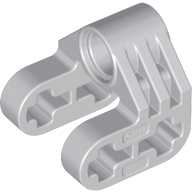
On the front, two studs with bar holes allow attaching CCBS armor or System elements, introducing more variety between figures and enabling the shell to be used in System MOCs, for example, as a barrel for various launchers, from blasters to flamethrowers to fire extinguishers, or as an exhaust pipe.
To preserve the G1 aesthetic, the shell is decorated with a piston, though this detail is purely aesthetic. It could be replaced with engraved runes, such as those on the TTV canon Mask of Creation, or any other ornament, but G1 fans always loved pistons, so they were the natural choice.

The greatest strength of TAFBS shells is that if LEGO never produces them, they are easy to print on a resin 3D printer since they do not require printing balls or sockets.
Thus, anyone with a 3D printer will be able to bring TAFBS to life with minimal effort.

And since were already talking about ball joints: for the knee joint, which must bend around an axis different from that allowed by a standard ballonaxle piece, the part library should also gain one more element. A ball with side walls, integrated with an axle, as shown in the sketch.
Such a piece would drastically improve MOC building and make life easier for BIONICLE fans.
Although a Toa could be built without it, LEGO should strongly consider introducing it. It would be useful not only in BIONICLE, but also in mechs, dragons, and all kinds of creatures.

Returning to the shells, their only real drawback is that the ball socket can be inserted only one way, which limits use in arms and lower legs.

It would be possible to solve this issue by expanding the TAFBS component library with a slightly modified variation of the element in question, where the only argument against such a solution would be the cost of introducing a new mold.

But making the piece more universal would make it too full of holes and potentially fragile, what is unacceptable for sets meant to be taken apart, mixed, combined, and modified as often as BIONICLE sets, which have always embodied the very idea of LEGO bricks.
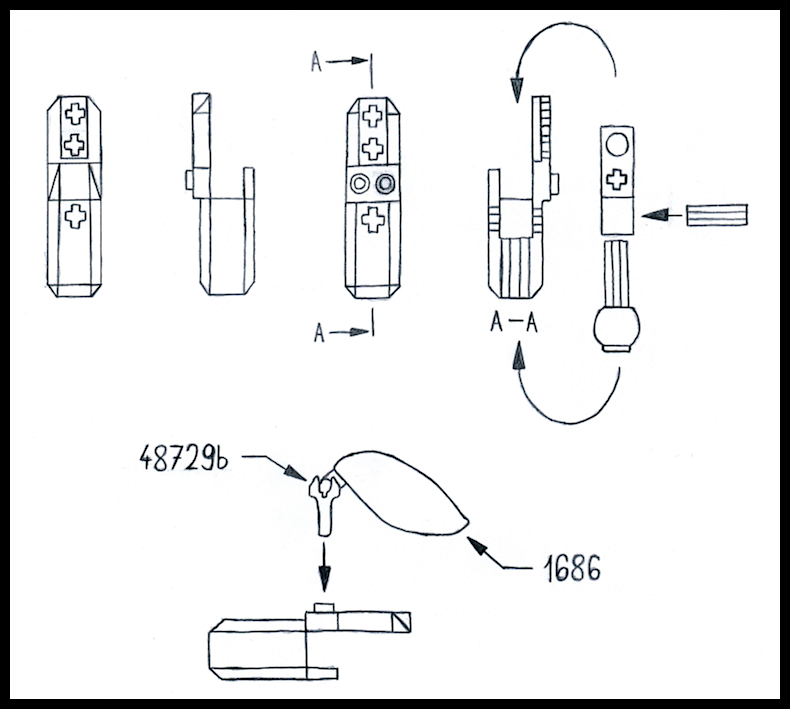
Also, a second shell design was necessary: one tailored for slightly shorter limbs, also compatible with most CCBS shell addons, and invaluable for building arms.
The alternate shell follows similar principles but allows the socket to be inserted deeper, shortening the limb enough to keep humanlike proportions relative to the legs and torso.
Its exterior has two studs with bar holes positioned precisely so that the only currently produced shoulder armor piece, despite being arguably the worst shoulder armor LEGO has designed in years, can be mounted despite its short, poorly placed integrated bar.
After several attempts, a design was achieved that accommodates this finicky part while keeping the TAFBS shell versatile and easy to armor with older pieces.

And speaking of arms, we must discuss hands.
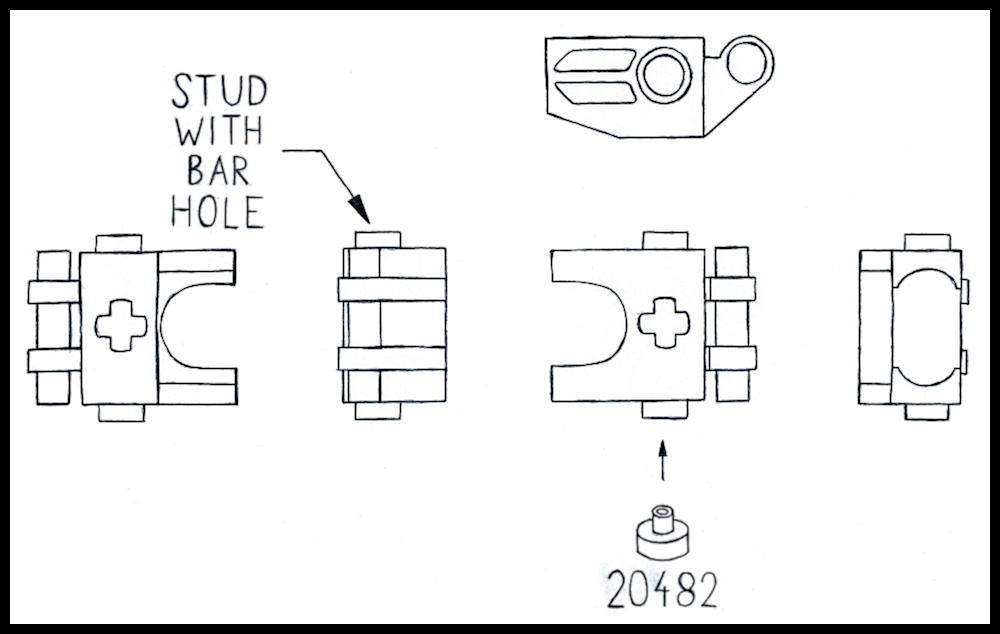
Glatorian hands and Hero Factory hands became obsolete with the end of CCBS, leaving us with three options:
To return to classic G1 hands, i.e., standard ball socket connectors, to build System hands from bricks, or… to introduce the mold BIONICLE fans have been asking for for years.
That mold would be a variation of a ball socket connector ending in a bar to which fingers could be attached.

TAFBS envisioned a hand design that would allow weapons to be attached in a way that enables the fingers to wrap around them naturally.
Crucially, the new part had to function as both left and right hand, to avoid having to introduce two molds just because of thumb placement.

Moving on, it’s time to address the torso.
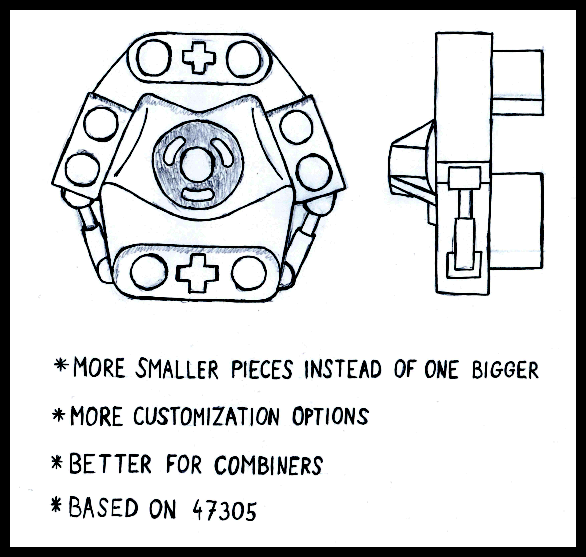
The torso is the heart of every MOC.
In medium sized sets, except for certain Barraki and Glatorian, it was always the most impractical element, as it was hard to use in any way other than the intended one.
This is especially apparent in Toa Mata and Toa Metru torsos.
Only later waves focused on splitting the torso into an upper half and a pelvis, allowing more variation in medium set builds.
This design change began around 2007, but unfortunately cost us the iconic gearbox function as the Inika build replaced it, a controversial change, as some disliked flimsy arms while others welcomed the added stability.

Nonetheless, among those building their own interpretations of canon Toa, the Toa Metru build always dominated.
Thus, the Toa Metru were chosen as the inspiration for the TAFBS torso, and the main challenge was to create a torso incorporating the arm swinging mechanism while allowing it to be aesthetically locked in place.

As shown in the sketch, the TAFBS torso is based on the upper half of a Metru torso.
By removing the protruding liftarms with axle holes, used in the original for attaching the pelvis, the TAFBS torso becomes more versatile and can easily function as, for example, a gorillas forelimb, as fans already did it in Toa Bomonga MOC.
By using more small parts throughout the build, this portion of the figure allows far more customization and enables buyers to create more creative combiners.
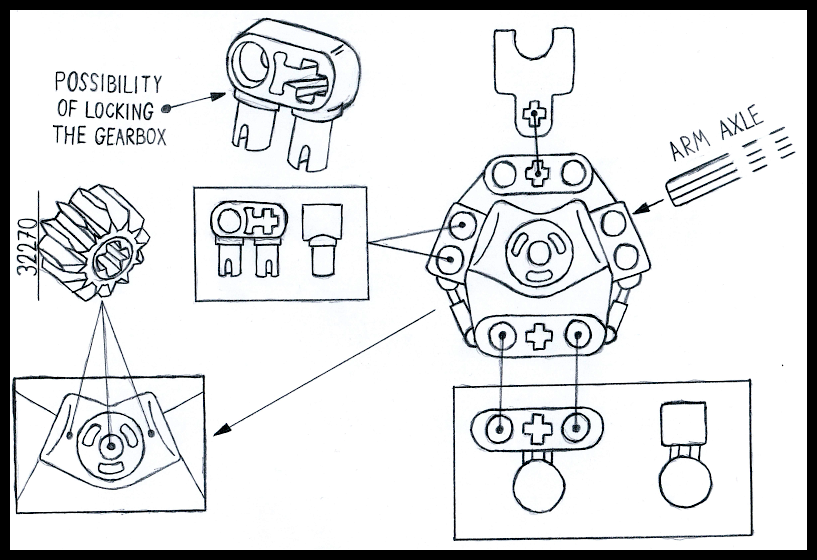
The first thing you likely noticed is the abundance of pin holes around the perimeter.
This stems from the desire to introduce two improvements to the Metru build:
An additional articulation point allowing the torso to bend at midsection, and the ability for the builder to choose whether the figure has a functional gearbox or fixed shoulders.

Contrary to appearances, designing a new torso does not require introducing a massive number of new elements.
And this number can be reduced even further if the midtorso articulation is removed, since that point alone would require at least two new parts.
But let’s assume we are not limited by budget or LEGO’s policy of minimizing new molds.

The first new element worth introducing would be a short liftarm with integrated pins, featuring one axle hole and one pin hole.
By inserting it on either side of the gear assembly slot, we could, depending on orientation, choose whether the axles aligned with the gears pass through the pin hole or the axle hole.
In the first configuration, the arm would function exactly as in classic Toa Metru.
In the second, the axle hole would block gear rotation, locking the mechanism, allowing those who dislike the function to disable it by simply inserting one part flipped around.

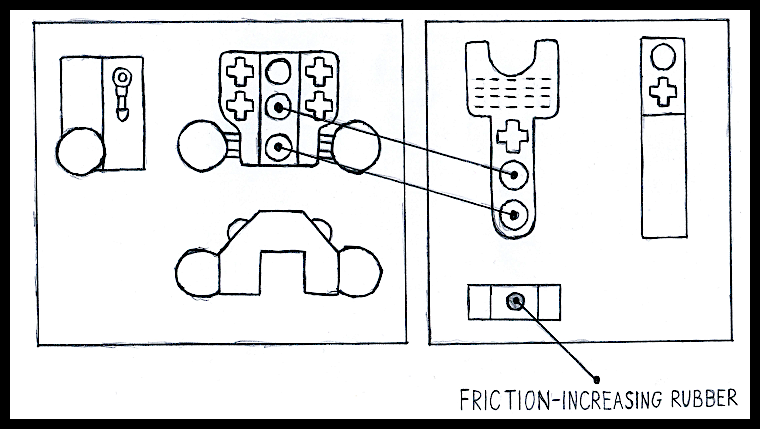
The second element that would greatly simplify MOC building is a threestud liftarm with an integrated ball.
This would allow the torso to gain a ball joint enabling rotation and bending.
To provide greater friction in that joint, a new variant of the ball socket with a rubber insert, similar to the specialized extensions used in G2 Toa limbs, would be useful.
In TAFBS, however, this wouldn’t be just an extension: it would be a fully independent, elongated part featuring additional axle and pin holes—an extremely useful piece for building wings, not only in BIONICLE but also in Ninjago dragons and similar sets.

Setting aside parts that would benefit other themes, there is one thing BIONICLE fans desperately need and which absolutely cannot be omitted: new pelvis pieces.
The downside of custom pelvis builds is that it’s hard to design a compact pelvis where the leg balls hold firmly onto an axle.
Thus, the T.A.F.B.S. parts library needed a solid pelvis compatible with both new and old Toa builds.
Here, the Vahki pelvis served as the main inspiration.
It was chosen over the Toa Metru pelvis because the latter had a protruding geared section between the balls that often collided with custom legs, and also because the Metru pelvis offered fewer creative uses.
The Vahki pelvis, by contrast, was widely used—for example as the hunched backs of certain Matoran, as a convenient mounting point for wings, and even as a core component of Takadox’s torso.
The T.A.F.B.S. version differs by being more three-dimensional so that when assembled as shown in the sketch, its integrated balls align with the torso’s center plane.
The element in the sketch also features decorative pistons, though these are optional and only aesthetic.

To complete the torso design, LEGO should revive two old parts in slightly updated forms:
the Slizer foot and a Bohrok shield.
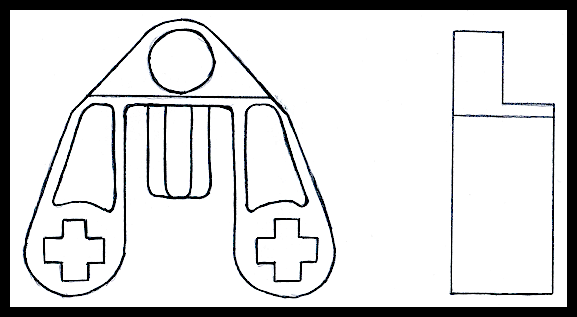
The Slizer foot would serve as a pelvic armor piece.
It is one of the most versatile parts ever used in BIONICLE sets, and to this day nearly every large MOC uses it to fill gaps or smooth out angular sections.
The T.A.F.B.S. version introduces two small changes:
First, it should be made of hard plastic rather than the soft, scratch-prone plastic responsible for many BIONICLE parts stored in bins ending up scuffed and damaged.
Second, the sloped sections of the Slizer foot should be flattened to allow it to serve as a Technic connector and function upside-down.

The second change isn’t really important, but harder plastic would be a gamechanger here.
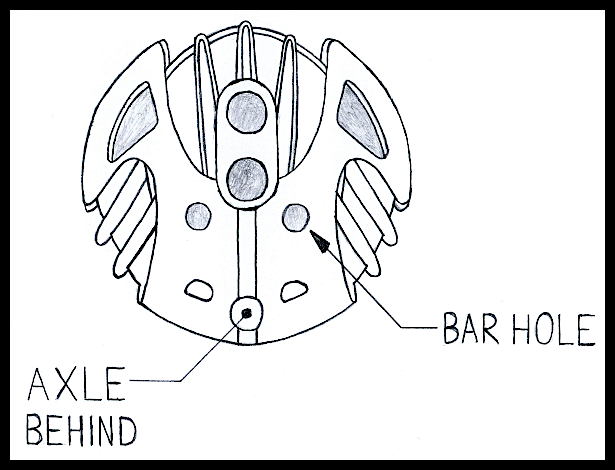
As for the Bohrok shield—given LEGO’s reluctance to fund new molds, it is unlikely that every Toa in a team would receive a custom-molded chest armor shell tied to their element.
Thus, it was important to design a highly universal piece not suggesting any elemental affiliation.
For example, a Tahnok shield would suit a Toa of Fire but not a Toa of Water.
The final design has more pin holes than the original shields, serving two purposes:
They increase friction when turning the gearbox knob thanks to a pin inserted into a pin hole aligned with the rotation axis, and they allow adding a decorative chest light similar to those seen on the Toa in Legends of Metru Nui.

Of course, the more various shields, the better, but since LEGO during last decade was reluctant to introduce a decent number of new elements for new sets, I believe that having whole team of Toa with same chest armor mold isn’t a bad thing as long as such shield will appear in six various colors. Hevily-detailed shield is always a better choice than overcomplicated prints used in G2, which made G2 chest armors useless for MOCs.

The final assembled torso design looks as follows:
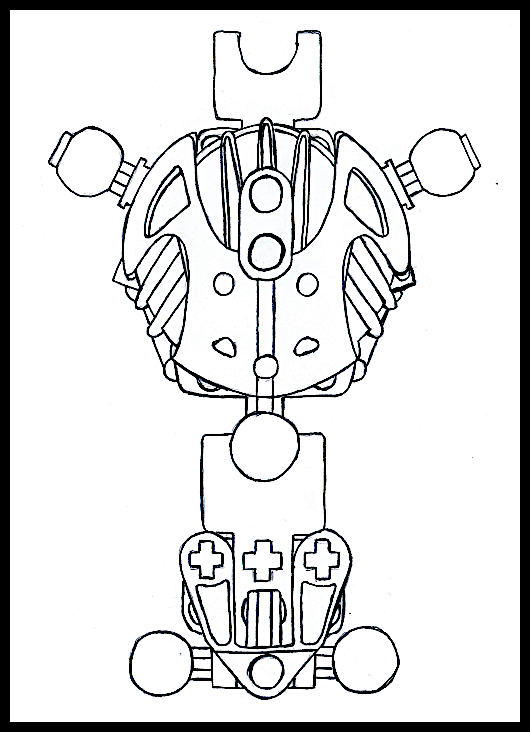
This is, of course, the most minimalist build possible, using as few pieces as necessary, but the number of possible variations is endless.

Since I have no idea about creating 3D models in Blender, my skills at this field are limitet to basic knowledge about using Solidworks, I’m unable for this moment to create .stl files for prototypes of my bricks, T.A.F.B.S. still has to be tested, but if no one more experienced than me attempts to design these parts soon, I will try to at least recreate the shells to build a Toa using limbs built according to the T.A.F.B.S. system.

If you want to see original drafts (I darkened the ones presented in this thread in GIMP to make them clearer), check out my Google Drive:

Also, I’ve made a video about T.A.F.B.S. for my YT channel, but this thread has everything you need to know about T.A.F.B.S. :wink:

~Taohe Netrus~

14 Likes

One suggestion: this could honestly be replaced with a part that fuses the axle and ball, as the ball would run the risk of sliding up and down on the axle if there’s no spacer to hold it in position.

2 Likes

The idea was to introduce the smallest possible amount of new bricks for that Toa build, but sure, ball integrated with axle would be an useful brick :slight_smile:

4 Likes

The Bionicle project you are doing is fascinating with such innovative designs you’ve made.

5 Likes

I got you. I forgot you’d stated that in the post.

3 Likes

Thanks :wink: I had a feeling that making ball/socket a separate part of limb piece and making the base of limb less specialized would be what BIONICLE community really need, and what would allow LEGO to make in future more diverse builds without creating new limb variant for every single wave. T.A.F.B.S. shells needs only new armor covers when the base could stay the same. And during 1st wave, system bricks with bar joints would be enough to create six unique Toa. So I’m proud of this brick the most. I’m curious how combiners would look like with our creative community. Probably, combiners wouldn’t be limited to humanoids anymore. I hope, someday I’ll be able to test it myself ^^

5 Likes

why is no one talking about the exellent drawings? they look pro!

6 Likes

It’s not a 810nicle Day so community at this moment probably is not looking for new fan projects, because there’s no reason for such to appear. :stuck_out_tongue:

Anyway, I’m glad you like it :wink:

5 Likes

I find the idea of System-based limb pieces to be a very interesting one. Instead of making the limbs exclusive to Bionicle use only, having a system of limbs with regular system studs would allow for endless versatility for other LEGO themes, which would more than justify LEGO spending the money in order to create such pieces. I imagine they could look something like the Knights Kingdom limb pieces, only using actual balls and sockets instead of ratchet joints:

I find it such a waste of potential that we only ever got those Knights Kingdom pieces with ratchet joints and not with balls and sockets, which would have made them incredibly useful for Bionicle MOCs.

6 Likes

This doesn’t really feel like a “building system” as much as just a standalone template build. There’s a lot of modularity but I’m not seeing the potential for much interchangeability or variety beyond surface level detailing.

I’m also very much of the opinion that a new platform for constraction should be designed in a way that could accommodate a wide variety of IPs and aesthetics, whereas this is very clearly exclusively tailored to Bionicle.

5 Likes

The most important bricks in that system: shells and the Technic liftarm allowing for blocking the gearbox mechanism, would be pretty useful in other series. Shells can be used as base for Star Wars-like speeders or in various mechs as weapons/jetpacks etc. Same with hands, mechs are pushed by LEGO to almost every single theme, so there will be always place for them. New liftarms are always needed, not only in BIONICLE but also in Technic vehicles. And in case of more specialized parts, we all remember how creatively LEGO was using BIONICLE bricks in, for example, monsters from LEGO Vikings. T.A.F.B.S. foot can be used as a base for torso, as forearm, as part of custom gun, it’s much more useful than HF or G2 feets. Even new head can serve as elbow with face motive. And torso base can become a gorilla hand’s base. Nobody is forcing builder to use those bricks as intended. The modularity of the build and high compatibility with LEGO Technic allow you to easly intertwine the T.A.F.B.S. system with existing parts.

And about “potential for much interchangeability or variety beyond surface level detailing”, well… LEGO killed 95% of bricks needed for BIONICLE builds, so there won’t be too much variety among early sets. We need to create whole building system from scratch. But by making skeleton that will be easy to customize, LEGO will have more budget for introducing more diverse armor pieces in later set waves as new sets won’t require new bonepieces etc. every year. Look at the first Hero Factory wave where LEGO introduced CCBS. All sets were clones with identical build. Even worse, CCBS couldn’t evolve too far from that, because base elements had barely two bar holes to work with. And in result, in BIONICLE Uniters’ builds, set designers had to start replacing CCBS solutions with custom Technic builds, because new solutions were flawed. Also Star Wars figures required introducing specialized shells and were becomming more and more Technic-heavy with every following wave. CCBS system was not designed with future development in mind.

T.A.F.B.S. on the other hand is trying to, at the start, give BIONICLE sets bricks that will allow for further evolution without need for replacing the base parts. You can mount G1 details, G2 armor pieces or future bricks from all sides. And new shells are so slim that legs won’t become massive after covering them with larger amounts of armor. T.A.F.B.S. legs aren’t bare from the back like in CCBS case. You can change the lenght of specific sections of limbs, add spikes on the sides… everything what has bar connection can be used to add more details.

Sure, you can clearly say that all T.A.F.B.S. bricks were designed with BIONICLE in mind, but almost all of them can be used in System sets if only Creative Team won’t be lazy. These parts are not as specialized towards specific build as CCBS. Still, Technic build is important part of BIONICLE identity and when designing parts for sets from this theme, we must prioritize Technic style and compatibility with Technic bricks over compatibility with System sets. BIONICLE fans don’t want System bricks in their MOCs, it has been proven multiple times. But it doesn’t mean that BIONICLE-styled bricks won’t be useful in Technic cars or Ninjago dragons. In proper hands, they can be a gamechanger.

Also, we need to remember that what I’ve presented so far is only a base for canister set. Barely a skeleton, awaiting for more bricks to be covered with.

Of course, I’ll be adding new ideas for bricks in the future. After all, I still have to suggest some weapon designs and armor pieces that would complete the build. For this moment, I barely suggested which already existing bricks could be used to cover chosen sections of the T.A.F.B.S. build. But 3-4 new bricks more and the whole thing will take on more character. We definitelly need new shoulder armor piece. And such piece needs to have multiple holes for spikes and blades too.

And I’m sure that, when I’ll be creating new bricks, other fans will also add some own ideas which will enrich T.A.F.B.S. We live in times of 3D printers after all. I’m not the only fan with ambition to create new building system for future BIONICLE sets. I’m simply one of the first who had time and ambition to draw those ideas and post them on this forum. There are multiple Discord servers where people are posting similar ideas and even ready .stl files.

8 Likes

I’m definitely looking forward to seeing them. I think they would make it a good bit clearer what the aesthetics of your part designs are going for, since that seems to be one of the main concerns of this topic.

4 Likes

@Lucasso_de_Luxor I am curious, do you have any ideas about how this system could be expended to be able to create not just 10$ canister sets, but also larger Titan-style builds as well? I think that is something that a lot of people who propose new ways of bringing back Bionicle without the old pieces often don’t think about, as they usually try to figure out a way to create a Mata/Metru Canister style build and I almost never see anyone propose any proof of concept for Titan sets, which in my opinion are an essential part of Bionicle’s identity. That’s part of the reason why I personally am more in favor of bringing back Bionicle as a new Technic-style line rather than with the Mixel joints, which most fans seem to be in favor of, as personally I just think the Mixel joints are just way too small and would not realistically allow for anything more than small Mata builds at most.

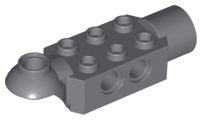
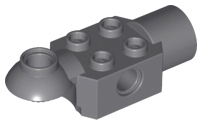
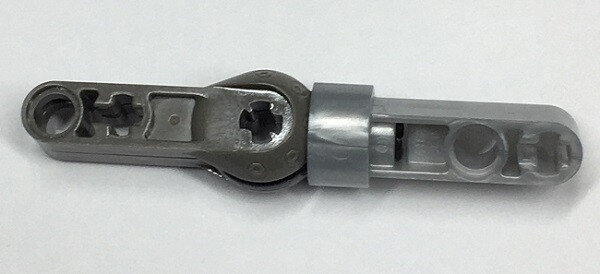
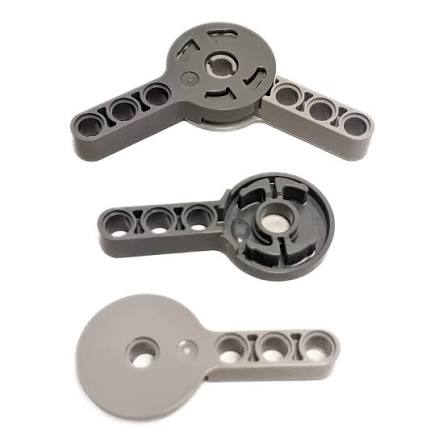
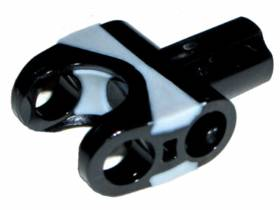
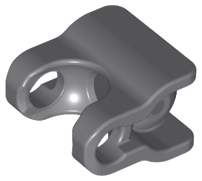
I am thinking maybe designing some sort of modified Technic lift arm pieces that have more slots for pins and axels elements at the end could do a lot of the heavy lifting, maybe modifying them also to have more stud connections, which could be armored up with system add-ons. Maybe it would be nice if LEGO brought back those Technic rotation joints which were used on Makuta 03’, as I think those pieces have a lot of potential for creating Texhnic based Titan builds, and it’s such a shame they only appeared in a few sets during the early 2000s:

But if we’re talking about using existing elements for designing Titan style builds, I think those particular Technic pieces that are currently still in production could be very useful:

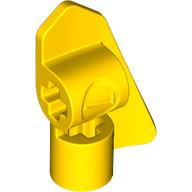
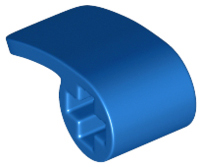
Also, just as a suggestion to maybe how you can expand your system idea, I think maybe bringing back those fairing pieces which were used in the first wave of KKII and some of the Jack Stone and 4 Juniors sets could really work really well with your idea:

Also, bringing back something like the Motorcycle top piece which was introduced in the 4 Juniors theme could work amazingly well as armor pieces for sets in the scale of your system, similar to how we have seen them used this piece used in the Exo Force gate assault set. A piece like that could really be used both for System motorcycles and as Bionicle armoring. It’s such a shame that those pieces fell out of use so quickly after about 2004, because they really had a lot of potential for Bionicle-style builds in my opinion.

7 Likes

This right here. This is one reason I want technic to remain a core part of any figure-building system. Basing a large figure mostly on System bricks has its limitations in terms of both articulation and details (see the UCS Hulkbuster for a good example of this). Without integrating Technic as a structural component, most figure builds are limited to a canister size or a little larger (like Furno XL), as Mixel and ball joints lack the necessary friction to provide support unless doubled up or used in really janky assemblies (the hip supports on several HF titans comes to mind here).

6 Likes

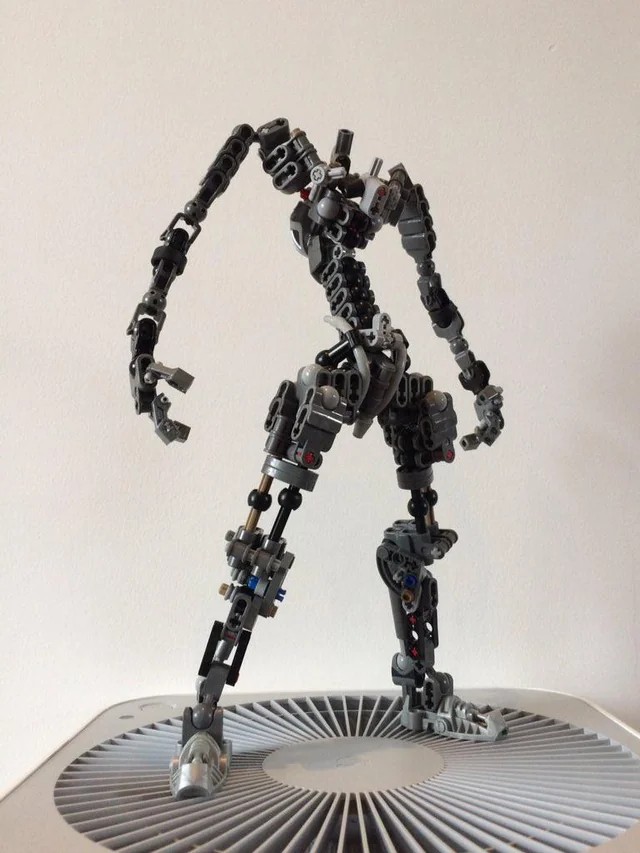
I agree 100%. I think any proposal for a new Action Figure building system should take seriously the use of Technic as a major structural component. Technic can be used quite effectively to create sturdy skeletons especially for Titan builds, the classic Bignicle frame I think is a good example of how this can be put in practice:


(Notice how with the exception of the arms, the frame is almost 90% comprised of still-in-production Technic pieces.)

However how a new armoring system would work remains an important question to consider. Without the various G1 armor elements or the CCBS shells, armoring up a Technic frame in a way that would look good would be quite challenging with the current parts catalogue. And using too much system as a way of armoring up such a frame would inflate the part count to such an extant that such sets would be ridiculously expensive.

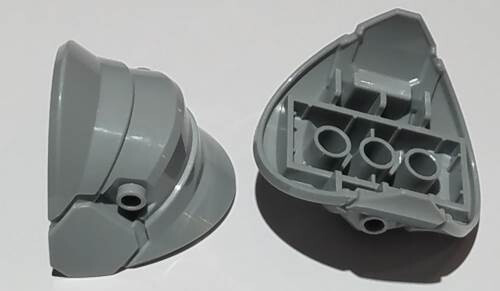
Maybe the best way LEGO could produce a modern Titan without the use of too many Bionicle exclusive molds, would be to introduce a new set of armor elements that would be compatible with System and have stud connections as their basis, such as the Reinhart shoulder armor piece which they made a few years ago for the Overwatch line of sets:


(I’m still frustrated that this piece was never used outside of that one single Overwatch set, LEGO’s supposed policy towards new molds is often applied so inconsistently that it makes you wonder whether producing new molds truly is as expensive for them as they claim or if they’re just being hypocritical and don’t want to spend money even when they can afford it, but when a popular license requires it, they would still do it right away without asking any questions).

5 Likes

I might be spoiling a bit now my ideas for sketches that I had planned to present later with this post (for now, none of them has yet been put on paper, as I am still in the process of refining the overall concept for Matoran and Titan builds), but from my point of view it looks as follows:

Matoran should be cheap. Consequently, the number of new elements introduced within a single wave should be reduced to an absolute minimum. At the same time, it would be desirable for the elements we do introduce to also be useful for Toa and Titan builds—and possibly even in other themes as well.

Naturally, this comes at a cost: there won’t be much variety among the builds of the six Matoran released during the first year of BIONICLE G3. We have to make many compromises in the early sets. The torsos and limbs of sets from the first waves would have to be constructed according to a similar scheme, and as a result, diversity would be determined mainly by accessories such as masks, weapons, or gadgets like an underwater scooter, treecutter device, etc. Similar to how it was handled with the Protectors in 2015.

The heart of a Matoran G3 build would be a brick based on 24191 (Uniter Armor, also known as the Unity Brick),


but slightly larger and better shaped to serve as a figure’s chest. At the same time, it would be full of axle holes, maximizing the usefulness of this part when building Titans or even Rahi. Such a brick would be connected to a T.A.F.B.S. Vahki-like pelvis with a Glatorian neck piece, giving G3 matoran another point of articulation.

In the early waves, costs associated with introducing new molds could be reduced by resigning from designing new weapons and masks for the second wave of sets, which would be dedicated to villains. Instead, for villains it would be enough to repeat the G1 solution and, before introducing Brotherhood of Makuta-like villains, which would require a massive number of new molds, I would focus on introducing a diverse fauna that recycles elements from the Toa and leans more heavily into the use of Technic pieces.

As for Matoran G3 limbs, I would base the forearms and calves on a smaller variant of the T.A.F.B.S. shell, while the thighs and upper arms would be simpler and slimmer, similar to the two shortest variants of bone pieces from BIONICLE G2. After all, we want Matoran not to be too tall compared to the Toa, and we want the sets to fall within a similar price range as the smallest LEGO Technic sets. And of course, in line with the assumptions of T.A.F.B.S., we also want the ball and ball socket not to be integrated into the limb base.

Naturally, the prices of BIONICLE G3 figures—both Matoran and Toa—would be increased by the cost of reintroducing classic Kanohi. However, we should remember that the repeatability of Kanohi masks is justified in BIONICLE lore, so once introduced, 12 mask designs could serve for three years, during which LEGO would only have to introduce recolors across subsequent waves (6 Toa Mata colors, 6 Turaga colors, 6 Metru colors, and more exotic variations like yellow, purple, sand green, sand blue, azure, teal, etc.). LEGO doesn’t even have to create new masks from scratch. All they need to do is to bring back original G1 masks with small changes.

Additionally, production costs could be recouped through mystery boxes with masks. If LEGO can release CMF series, it can also restore the collectible aspect of the BIONICLE theme within BIONICLE G3. Not as replacement for one CMF wave, but as a core part of BIONICLE sets’ wave. A blind bag with three masks and a guarantee that two of them are variants not appearing in any set would be selling well. Especially if LEGO were to bring back all masks from 2001 in versions with an axle instead of a stud, and then, after three years, all masks from 2004, but made of hard plastic (I hated that perpetually scratch-prone rubber coating introduced with the Toa Metru) and with a full palette of recolors. Kids would be able to create own characters and set them in BIONICLE world by simply buying second copy of given Toa, replacing, for example, Kanohi Hau with Kanohi Miru, giving the figure a custom weapon, or even a blade from Ninjago mech and changing few minor details with spare parts from other sets. One booster pack with random Kanohi would bump the sales of standard sets drastically. It’s only a matter of proper marketing, encouraging the creation of your own heroes and justifying their existence in the canon.

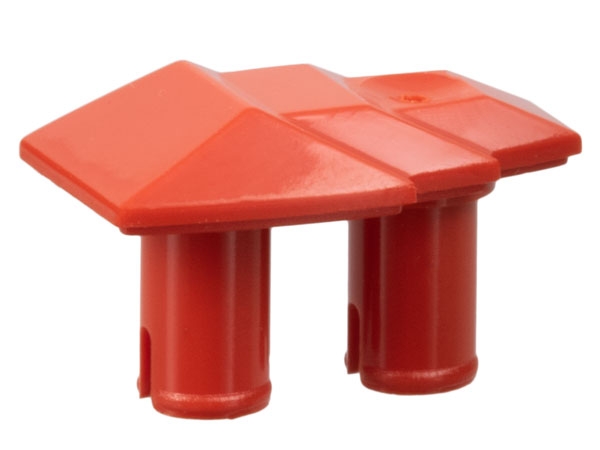
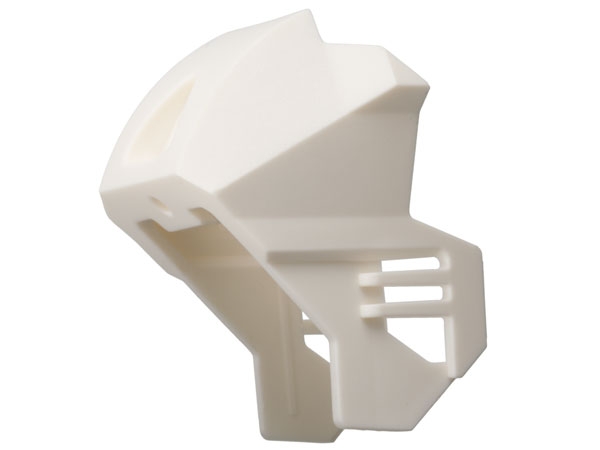
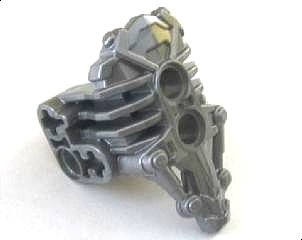
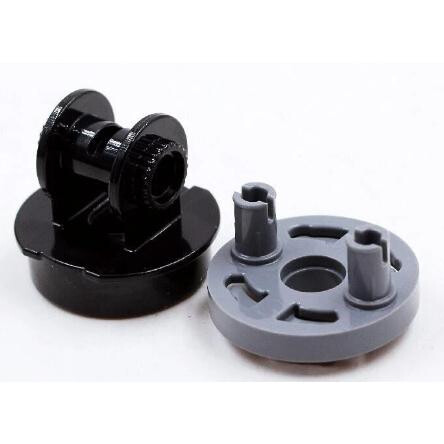
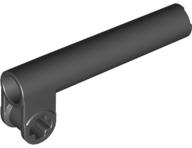
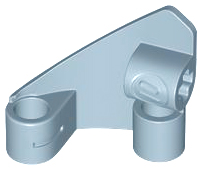
When it comes to Titans, LEGO has already introduced a very useful novelty: parts 79505 and 80563,


which are extremely useful when constructing thighs. We even received a black version of the piston introduced originally by the 2006 titan sets.

On top of that, the company is still producing the incredibly useful Glatorian necks. And also the Hordika necks, though I prefer the Glatorian ones because of their straight shape and axle hole with better friction.

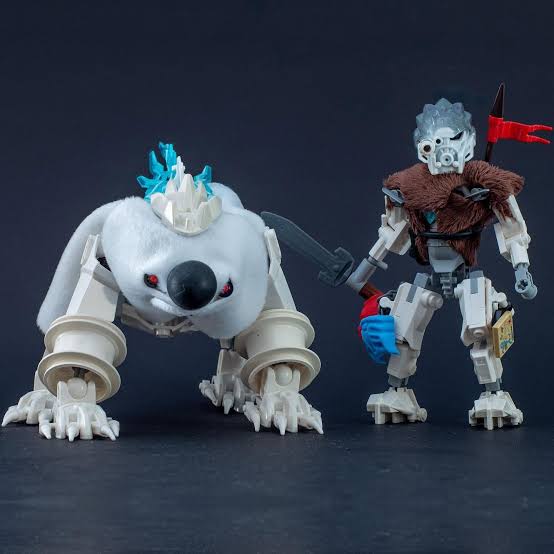
If we look at the construction of the more complex figures released by LEGO after BIONICLE G1—such as General Grievous, K-2SO, Umarak the Destroyer, Witch Doctor, or Darth Vader (the later version with a removable helmet)—we’ll notice that they were heavily based on LEGO Technic elements, and that about 50% of those constructions can still be recreated using parts that are still in production.

The problem is the lack of shells and bone pieces, which—due to their simple design and limited customization options—were a weakness of the CCBC system anyway. I’ve already solved the shell problem by introducing T.A.F.B.S. shells for the Toa. Thanks to abandoning the idea of balls and ball sockets integrated with limbs’ base, these shells can serve as the core of a thigh or torso, or be connected in parallel to achieve a double ball joint. Of course, it would still be worth designing a few new elements that allow these shells to be covered more effectively, but when designing Titans for early waves, the Creative Team could manage using only Technic panels. And LEGO has introduced quite a lot of new variations of those recently: 89679, 2389, 2387, 2403, 2395, 71682, 2457… Naturally, these panels are stylistically too simple, and to achieve a better visual effect, after the first year it would be worthwhile to introduce more detailed armor covers for Titans—but this is not something that couldn’t be smuggled in by adding such elements to medium-sized sets.

Since LEGO became rather stingy toward the end of BIONICLE G1 when it comes to introducing large numbers of new molds each year, G3 Titans would have to be very Technic-heavy, especially during early waves, and would certainly benefit from reviving solutions known from G1, especially in leg construction. As a result, an essential element to get restored would be a refreshed version of a brick already known from 2004: x1192px1.


An Axle Connector 2 x 3 with Ball Joint Socket and Axle Socket, with a molded rubber insert like the one used in G2 leg extenders, would solve many of the problems MOCers currently struggle with.

Also, THIS bricks keeps being a lifesaver for every BIONICLE fan:

Due to the small number of new molds LEGO would be willing to introduce in the first year, when creating Titan sets, I would initially focus on Rahi, as well as on exploring the combiner concept (maybe a G3 version of Rahi Builder set? :slight_smile: ). LEGO could even organize a series of MOC contests for Rahi designs for BIONICLE G3, where later canonization of winning builds would encourage fans to buy multiple copies of a single set in order to build a collection not only of official sets, but also fan-made constructions. BIONICLE, more than all other original LEGO themes combined, inspired experimentation with combiners and MOCs, as it was the perfect universe to expand with new species of animals and sapient races.

And the best thing about Rahi is that the larger the scale of the creature, the smaller the need for new molds. While medium-sized sets would require at least one universal, easily customizable head mold, figures on the scale of a Muaka could have their heads built 100% from LEGO Technic bricks.

In other words, the hardest part of restoring the BIONICLE is launching the theme by introducing a decent number of new elements and ensuring that those elements fully support the MOCing aspect and offer customization potential that would satisfy adult buyers.
And also writing a story complex and engaging enough to attract and keep children in this world. In short: less childishness, more darkness, and definitely lots of mysteries around which kids could build various theories. The phenomenon of FNAF games has shown perfectly how to keep a franchise alive in children’s minds these days. Dark world, edginess, toned creepiness, secrets, puzzles, and slow distribution of clues how to solve those secrets are key when creating a successful IP for modern kids. We may live in the TikTok generation, but a significant percentage of kids like it when their intelligence is respected and when they can engage with something edgy that looks like it’s aimed at older audiences. BIONICLE G1 understood this, which is why the theme is timeless and why the community still is so active on social media. But the matter of story is a topic for a separate thread. Let’s stick to G3 builds.

I believe that 50% of what is necessary for BIONICLE to live… already exists. Balls with through-holes, the basic ball socket variant, Hordika necks, Glatorian necks, Technic panels, axles, pins, a mass of small bricks with bar-connection—all of this is still being produced. BIONICLE G3 could return thanks to 6–12 mask molds and fewer than 20 molds for new elements making up the figure’s structure, if only those elements are closer to T.A.F.B.S. shells than to CCBS shells and G2 bone pieces. What’s important is that when BIONICLE returns, production of these elements must be kept alive and the system must be developed consistently—supported by using BIONICLE bricks in other themes, as well as by introducing elements in themes like Ninjago that could be reused in BIONICLE sets. We need to restore a level of symbiosis comparable to LEGO Vikings or LEGO Exo-Force.

I’ll do my best to make a second video, where I’ll introduce sketches of bricks needed for Matoran G3 build, but it will take some time. I want to be sure that new molds will be perfect and that they’ll offer the level of modularity and the amount of customization options that will make such pieces as immortal as the Toa Mata foot, which to this day is one of the most versitale BIONICLE bricks ever invented. :slight_smile:

7 Likes

@Lucasso_de_Luxor Thank you once again for your thorough answer to my question, I really love and appreciate the time and dedication you have put into this concept. I really hope I could also perhaps help out with some ideas, even though personally I don’t have that much skills when it comes to drawing. But, as someone who’s been building MOCs with both System, Technic, and Bionicle pieces for a very long time, I feel like I could be a voice representing the MOCers and what we would like to see in a Bionicle revival like the one you’re proposing (I even proposed a while back my own ideas for a remake of the Mata sets using almost exclusively currently produced System/Technic pieces, you can check them out if you’re interested, I feel like this is something you would also like to see: Here is my proposal for a Technic-based Standardized Onua Revamp (Technic) and one for a System based Standardized Kopaka Revamp (System) and another one for Onua as well Standardized Onua Revamp (System)

I have said earlier how I don’t think the Mixel joints would work that well in a Bionicle reboot because of their small size, however I think when it comes to designing cheap Matoran builds, they can actually be perfect, as I think they are just the right size for such builds. The Matoran I think can be the least problematic Bionicle sets to design, as their small scale can easily be achieved with a minimal number of new pisces, I’d argue you could even make them while introducing 0 new molds (recycling Toa masks and weapons, etc).

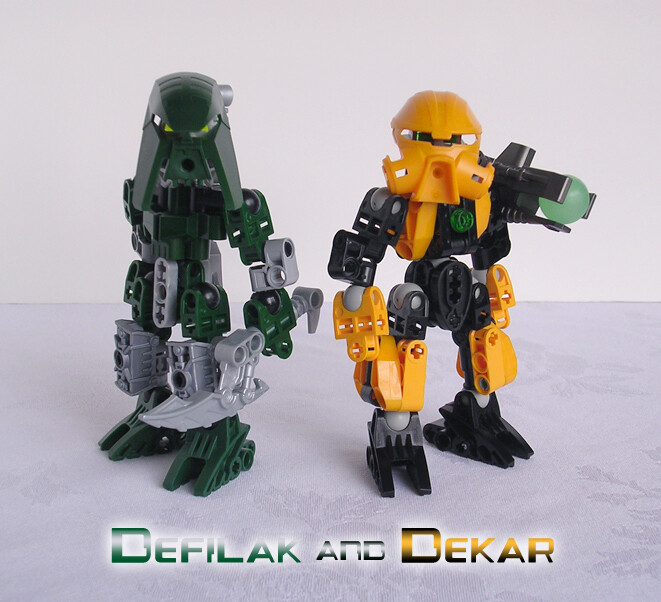
When it comes to Matoran, you could go two different routes. You could make them more system heavy, like in this MOC here:

Or more Technic heavy, like in this MOC here:

Notice how with the exceptions of the Masks and the weapons, both the MOCs I have shown are almost 99% comprised of currently produced pieces. Thus, while I do think creating some kind of standard frame for Toa builds, like the one you have proposed, would be absolutely necessary, I do think the Matoran could prove to more fexlible, with designers being able to experiment with more variety in the arm, leg and torso designs rather than making them all clone builds with different masks. That I think would go a long way in ensuring that G3 does not repeat the same mistake of G1 of having most of its early waves be just clone sets, which reinforced a sort of “you got one, you got all of them” mentality, rather than encouraging the getting of multiple sets within the wave. The masks could be just recolored versions of the Toa masks, like you said, which would go a long way in making the characters feel like they have distinct “faces” as opposed to repeating the mistake of the G2 Protectors, which, while it was nice to get the same mask in 7 different colors (I genuinely think G2 missed a great opportunity in giving us recolors of the various masks, we did get a few of them in some of the polybags, but compared to G1 it was a big letdown), felt like just different variations of the same character rather than distinct characters.

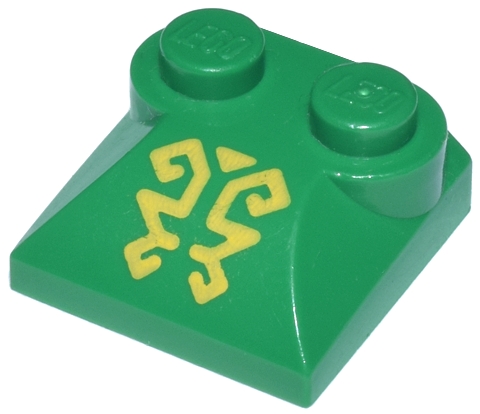
Different fans might have different preferences, some might prefer the more Technic approach to Matron as it would be more in line with the G1 aesthetic, however, having more system heavy Matoran builds I think would be safer, as designing the Matoran in that way could help in making the sets feel more “LEGO” and less “alien” to casual buyers not accustomed to either Technic or Bionicle (which both themes have historically and in the modern day tended to have their own niche, rarely sparking the interest of more System fans who prefer Minifigure-based sets). Plus, making those builds system heavy could perhaps boost their appeal among System MOCers, who might consider buying them for the sake of getting new system slopes in new or rarer colors. I think here using a bunch of those slope pieces with cool printed patterns and details, like those used on the chest of the KKII figures, could be very nice, and it would be something that would give the builds a more district vibe that wouldn’t be achieved as easily with Technic pieces (which rarely come in printed forms). I could see such pieces coming with all sorts of cool prints, like maybe various runes like those we have seen on the Skrall shield for example, looking very nice.

I think it would be worth pointing out here that reputable sources, including Greg Farshtey himself, have said that the 2001-2002 Mask masks tended to not actually sell that well. This may perhaps sound unbelievable to us fans today, who are accustomed to collecting those masks and seeing them fo for exorbitant prices online, but according to Farshtey and other designers, it appears that during the play testing phase, the Kids actually found the weapons of the various characters more interesting and they played with those more than with the masks. As a result, many of the Mask packs tended to actually be shelf warmers, which did not go well for LEGO, as producing so many recolors still cost them a lot of money. Having a return if the Kanohi mask packs would perhaps be a dream come true for many Bionicle collectors, but to be brutally honest I think that is in if itself more unlikely than the return of Bionicle itself in any form at all.
Of course, I want to be optimistic and hope that the claims that those early Mask packs didn’t sell well aren’t true or at least are not fully accurate (I would totally understand why the Krana and the Kraata packs would have been shelf warmers, those just feel like a cop-out compared to the Kanohi), but we have to consider that when thinking about a way in which Bionicle would realistically return. That said, we have recently see those small Formula 1 Blind bag collectables for the Speed Champions theme recently, so perhaps LEGO is more willing to continue experimenting with the blind back pack concept again? Though if they do, making them cheap and under 2$ would be absolutely essential, as the current price of the CMFs (5$ for a pack) is ridiculous and getting already out of the range of what can actually be considered “pocket money”.

That’s actually a very interesting point, I have never thought of that before. But as someone whose youngest sibling is a big fan of FNAF, this totally makes sense to me. I think this is indisputable proof that serious stories with great mystery and more edgy vibes are still viable and can still capture the attention of young kids, contrary to what some soulless, 50 year-old business executives working at the top of LEGO’s marketing department might think. It is very unfortunate that the recent original themes we have gotten have tended more towards the more “Tik Tok, short attention span” way of doing things, with more goofy, cartoony and colorful characters rather than more dark and edgy aesthetics like G1. This will be an aspect that can make or break G3 entirely even if the sets are absolutely perfect down to the most minute details, though I am optimistic that this could realistically happen in the current generation more than ever, as the amount of Bionicle fans who now currently work for LEGO is greater than ever before, including our beloved @Sokoda and @toothdominoes.
Speaking of which, does anyone know whether @Sokoda is still active in the community, or whether his current official job at LEGO prohibits him from directly participating in the community any longer? I feel like if he himself saw those concepts and designs here, he could be our gateway into getting those ideas on the radar of LEGO themselves.

6 Likes

I agree that it would be possible to make some use of System bricks in the case of the Matoran. These are common elements that remain in continuous production, and as such—unlike bricks that would be introduced as part of BIONICLE G3—there would be nothing wrong with covering System pieces such as slopes with prints referencing Māori tattoos or Okotan runes. Such a detail would undoubtedly give the characters a more unique identity, and by limiting the use of prints to slopes—which already appear in their unprinted form in nearly every modern set—the implementation of prints would not restrict the MOC-building aspect of BIONICLE G3 sets. After all, G3 bricks would remain untainted by prints, and therefore, still versatile.

For this reason, the front of the T.A.F.B.S. shells for Toa that I have already presented, as well as the smaller variant I am planning to draw for the Matoran, are decorated on the front not with an axle hole, but with a stud with a bar hole. This allows such System details to be attached to the figure, enabling greater diversity for builds in the early years.

Nevertheless, I believe that the Matoran represent an important opportunity to introduce a greater number of useful bricks into the BIONICLE G3 parts pool—elements that would find thier use in Titans. LEGO has always based Titan builds almost entirely on existing parts, producing for the largest sets only new, unique masks and recolors of elements that had already appeared with the Toa and Matoran.

In other words, when designing the Matoran, priority should be given to implementing—through their build—as many smaller, yet still versatile elements, as possible, which would prove indispensable when armoring Titans and filling gaps in their builds. The more versatile the bricks are in small and medium sets, the more detailed and stylistically consistent the titan sets will be.

A properly thought-out base for a Matoran body construction would make it possible to achieve a result similar to that of the Matoran you attached in your last post, without excessive reliance on System bricks, the overuse of which would likely discourage BIONICLE purists from purchasing such sets.

As for polybags with masks, I remember from my childhood that I really disliked rubber elements, which meant I had no motivation to collect Krana, let alone Kraata. I also disliked the masks released after 2002, precisely because hard plastic was replaced with a more rubber-like material that scratched very easily. Additionally, the storyline at that stage did not yet encourage creating one’s own Toa, as Kanohi masks were merely replacements for the masks of the main characters. It was only in 2004 that the concept of dozens of large Toa teams was introduced. And, ironically, that was exactly the moment when mask polybags were replaced by recolors of ammunition for various launchers :stuck_out_tongue:

6 Likes

I don’t think FNAF is the best example of this from a writing standpoint (it’s more so the games based on it that got it popularized, because the books are pretty ehhh in terms of story). It’s more of a merely edgy horror franchise than it is serious, and half the plot is just people getting turned into gory corpses by either perverts or demon/ghost-possessed animatronics (or self-aware animatronics?). Unlike even Ninjago, these kinds of stories don’t offer real stories, just shock value. It’s why every decade there’s a new horror fad that replaces the prior. They don’t stick after a year or two, because the market gets saturated with FNAF or Stephen King ripoffs and adaptations, and suddenly they are pretty obviously written as formulaic stories with little change from book to book.

4 Likes

Maybe I oversimplified my statement about FNAF a bit too much, so I’d like to expand on what I meant. By bringing up FNAF, I am not suggesting that it has an ambitious or serious storyline. In fact, what’s most interesting about that story largely stems from its ambiguities, which allowed theorists to piece together threads and create fan stories far darker than the games’ actual content—before William Afton was even introduced into the lore.

I believe the story of BIONICLE should be less childish than series like Ninjago, Chima, Nexo Knights, Dreamzzz, or Monkie Kid, and should instead aim for something closer to what the later seasons of The Clone Wars or the final season of Samurai Jack were: a story that grows up with its audience and has a deeper layer—deep enough that it continues to attract older viewers years later. The main plot of BIONICLE G1, for example, wasn’t particularly adult, but the short side stories focused on side characters already tackled themes such as political intrigue, war crimes, purges, the extermination of entire races, and at times even introduced elements of body horror. Nevertheless, the core storyline remained restrained enough—and not forcibly family-friendly—so that younger fans didn’t feel overwhelmed by the weight of that world, while still feeling that they were engaging with something more ambitious than what they normally watched on children’s TV channels. And just as The Clone Wars skillfully balanced Jedi adventures with, for instance, the Mandalorian Wars and Maul’s conspiracies, it became a timeless series that still resonates with multiple age groups.

My mention of FNAF, however, was meant to highlight the fact that modern kids tend to like two things:

  1. Engaging with something that feels darker and edgier than mainstream cultural products (it’s no coincidence that during the Jetix era, the most popular shows at my school were anime like Shaman King and Naruto, where blood was present in many episodes).

  2. Engaging with a story full of gaps, where the creators leave room for theorizing—allowing YouTube channels to flourish, where Youtubers can interact with viewers and collectively solve the universe’s mysteries, often creating stories more compelling than the source material itself.

FNAF is hardly the only example of this. One only needs to mention the success of Gravity Falls and the hundreds of theory videos on YouTube, where people solved anagrams, searched for meaning in symbols hidden in the background, connected the dots, and tried to predict where the story was heading.

LEGO, meanwhile, keeps tying its own hands by constantly pulling back the reins on its stories whenever they begin to develop into something too dark or too complex. We can see this clearly in Ninjago, which suffers from the “Ash Ketchum syndrome,” where the status quo is repeatedly restored to avoid creating too high a barrier of entry for new fans. As a result, longtime fans gradually drift away, tired of the lack of a sense that the story is going anywhere or that the characters are truly achieving anything. Sure, one can argue that BIONICLE G1 was too complex—but that series never received a full TV show telling the story from A to Z. Today, every new series gets a dedicated show, so in the Netflix era it wouldn’t be nearly as difficult to build something around BIONICLE’s lore on the scale of Warhammer 40K, while still keeping it accessible to new fans. Especially since we’re talking about a universe where teams of main protagonists rotated constantly. We spent the first three years with the Toa Mata. The next two with the Toa Metru, whom we had known for three years as the Turaga. Then came the Toa Inika, who emerged from Matoran introduced back in 2001. 2009? A soft reboot and yet another team of new characters—this time ones that longtime fans didn’t feel particularly attached to. Nevertheless, despite the complexity of the plot, this rotation of protagonists helped keep the entry barrier low enough. If only we got an adaptation of the Ignition trilogy by Miramax…

Returning once more to my earlier point: FNAF’s story is a narrative mess, sure, since to this day we don’t know the complete plot of even a single game—and the division of the lore into three parallel canons (games, books, and films) certainly doesn’t help. Yet despite this chaos, it managed to become a global phenomenon because it struck chords that kids enjoy. If you strip away bright colors and slapstick humor in favor of darkness, more mature characters, and elements of horror, you enter a niche that the toy industry largely neglects. BIONICLE once occupied that niche and became timeless compared to other LEGO themes. FNAF rediscovered this formula, cleverly leveraging the advantages of the social media era and adding horror factor to the mix. Poppy Playtime copied FNAF’s formula and also dominated the internet, because horror aimed at children is such a neglected niche that—even as a less original franchise—this mascot horror managed to carve out a place in the mainstream. Even something as ridiculous as Skibidi Toilet gained a kind of cultural phenomenon status thanks to its mix of creepy designs, an arms-race motif (who didn’t enjoy watching mechs receiving endless upgrades as a kid?), and… toilet humor.

I’m not saying that BIONICLE G3 should have a plot as full of holes as FNAF’s, go full mascot horror like most of the currently popular games elementary school kids talk about in the hallways, or—Mata Nui forbid—imitate Skibidi Toilet in any way. But there is a reason these universes attract children. And when LEGO decides to bring BIONICLE back, it would be worth it for the Story Team, instead of repeating the formula LEGO has used since 2011, to develop a new formula specifically for BIONICLE. Story Team needs to analyze which elements allow the independent creations I mentioned earlier to outperform franchises into which corporations pour millions of dollars. BIONICLE G1 was built on experimentation and risk-taking. BIONICLE G2 abandoned risk. It wanted to be safe, colorful, and funny. And we all remember how that turned out. There’s no point in introducing two identical series that will compete with each other. Especially since the future of these series will depend on the sales of products that would sabotage each other. Therefore, creating a product for a niche that the company ignores should be a priority when designing BIONICLE G3.

We don’t need a second Ninjago. We need something that strikes tones other series are unwilling to touch. A series aimed not at children, not at adults, but at teenagers. LEGO has realized that adults are also interested in its products, and that’s good, but instead of using that insight to develop original story-driven themes aimed at teenagers, the company focused on releasing dust collectors in black boxes labeled 18+, while new narrative themes grow increasingly infantile. More infantile than Exo Force or other original themes from 2000s. BIONICLE G3 could be the best opportunity to create a product that fills the biggest gap in the company’s portfolio. The only question is whether LEGO is still capable of taking risks—or whether it prefers to watch as more and more potential customers switch from LEGO to Gundams and Warhammer. And you can believe me, it’s really popular phenomenon.

8 Likes